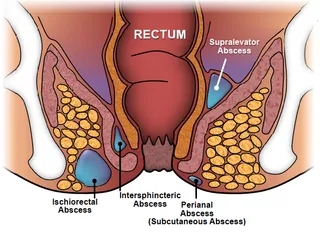
A recurrent fistula means symptoms or drainage have come back after treatment, or the tract never fully healed. That news can feel discouraging, but it does not mean you failed. Recurrence often relates to anatomy, disease type, or healing conditions—things surgeons and patients can work on together. This article explains common causes, the role of imaging, habits like smoking, and inflammatory bowel disease (IBD). For difficult anatomy, read our guide to complex fistula treatment. For services in Pune, see fistula treatment Pune and book online. Proctology care is available for structured follow-up.
Medically reviewed by Dr. Kundan Kharde, MS, FMAS — Senior Proctologist at Sharvari Hospital, Pune. View profile.
What counts as a “recurrent” fistula
Symptoms returning after a symptom-free period
Some people do well for weeks or months, then notice new swelling, pus, or pain similar to the original problem. That pattern suggests the tract reopened or a new branch became active. Your surgeon will compare your new exam to the prior operation note.
Persistent drainage after a procedure
Sometimes drainage never fully stops. That may mean incomplete treatment of all tracts, ongoing infection, or a staged plan (for example, a seton) that is meant to drain while inflammation settles. “Recurrent” and “persistent” both deserve review, but the next step may differ.
Common causes surgeons look for
Missed branches or secondary tracts
Fistulas can have side branches that are easy to miss if they were not seen on initial exam or imaging. Surgical literature and specialist society teaching stress careful mapping for this reason. If a branch remains, it can keep producing drainage after the main tract was treated.
Undiagnosed high or complex anatomy
High fistulas—those involving more muscle—carry higher recurrence in many published series than simple low fistulas. Surgeons sometimes balance healing against continence risk, which can mean staged procedures rather than one aggressive step. For a plain-language overview of specialist pathways, see complex fistula treatment.
Patient factors and healing conditions
Smoking and tissue healing
Smoking is widely linked to poorer wound healing in many types of surgery. For anorectal problems, poor healing can translate into longer recovery, infection, or failure of a repair. If you smoke, ask your care team about cessation support; even partial reduction before surgery can matter.
Constipation, straining, and diarrhoea cycles
Hard stools and straining increase pressure and friction near healing tissue. Frequent loose stools can irritate the area and make hygiene harder. A steady fibre plan, fluids, and medicines only as prescribed often help—your team tailors this if you have IBD or other conditions.
Inflammatory bowel disease (Crohn’s) as a special case
Why recurrence patterns differ
In Crohn’s disease, inflammation can persist even when surgery addresses a tract. That means recurrence may be driven by active disease, not only by a technical miss. Patient education from major centres often highlights that medical therapy and multidisciplinary care change the roadmap. In India, tuberculosis is an important mimic of Crohn’s — see fistula with Crohn’s or tuberculosis: why some fistulas won’t heal.
Why multidisciplinary care matters
Gastroenterologists and surgeons may coordinate setons, medication changes, and timed surgery. If you have known IBD, tell every new clinician—your prevention plan is different from a straightforward cryptoglandular fistula.
Prevention tips that are realistic
Follow-up timing and wound care
Attend post-op visits even if you feel fine. Early problems are easier to fix. Follow instructions for sitz baths, dressings, and activity limits. If drainage changes colour, amount, or smell, report it.
Diet, fluids, and bathroom habits
Aim for predictable soft stools. Whole grains, vegetables, fruit (as tolerated), and adequate water are common building blocks. Avoid starting new supplements without asking, especially before surgery.
When to seek a second opinion or advanced imaging
Repeat abscesses after surgery
New abscesses may mean there is still unaddressed anatomy or a new problem. MRI or endoanal ultrasound maps what the exam cannot — Almost every fistula patient at Sharvari Hospital is imaged before surgery — an MRI fistulogram or a trans-rectal ultrasound. Our diagnosis and imaging article explains how these tests fit in.
Changing symptoms
New pain, fever, heavy bleeding, or worsening incontinence need prompt review. For recurrence counselling and technique options, the fistula treatment Pune hub links education with appointment paths.
After two or more failed operations
At that point a different process is needed, not simply another attempt. Our guide on second opinions for recurrent and high-complexity fistula explains what a proper re-assessment includes — previous operation notes reviewed, an MRI fistulogram, formal continence scoring, and testing for Crohn’s or tuberculosis before any new surgery is planned.
Imaging in recurrence: what patients should know
If fistula symptoms return, expect MRI or endoanal ultrasound before any repeat operation — Almost every fistula patient at Sharvari Hospital is imaged before surgery — an MRI fistulogram or a trans-rectal ultrasound. These tests do not “cure” anything by themselves—they reduce surprises in the operating room by showing branches, abscess pockets, or unexpected extensions. Imaging is especially useful when the exam is difficult because of pain, scar tissue, or complex prior repairs. Think of imaging as a map for a safer second journey, not as a replacement for skilled examination. For what that map looks like — a real tract mapped on MRI and confirmed by the probe in theatre — see MRI fistula mapping.
ASCRS-style teaching themes (patient translation)
Specialist societies emphasise complete drainage of sepsis, accurate identification of all tracts, and continence-preserving choices when muscle is involved. For patients, that translates to practical ideas: finish antibiotics as prescribed when indicated, do not skip follow-up while you still have drainage, and ask what the team will do if the first view in surgery does not match the scan. Good care sounds boring—clear steps, clear follow-up—more than it sounds dramatic.
How Sharvari Hospital approaches difficult cases in Pune
Structured re-evaluation
We take history, exam, and imaging seriously before repeating surgery — Almost every fistula patient at Sharvari Hospital is imaged before surgery — an MRI fistulogram or a trans-rectal ultrasound. The goal is a plan that matches your map, not a quick repeat of the last procedure name. The hospital’s full pathway for treatment for recurrent fistula — MRI-planned, sphincter-preserving and often staged — is described on its own page.
Link to broader proctology services
Complex cases may combine staged surgery, seton management, and sphincter-sparing options. Explore proctology and book online when you are ready to be seen.
Practical diary: what to track between visits
A simple notebook helps your surgeon more than a vague memory. For two weeks, note drainage amount (none / spot / pad), pain score out of ten, fever, bowel habits, and any new openings. Photographs are optional and should be private—some patients find them useful, others prefer not to. Also track smoking (even one cigarette), because it matters for healing conversations. If you started a new medicine for another illness, write it down—drug interactions and stool changes are relevant.
Emotional fatigue: recurrence is common enough that you are not alone
Recurrence can feel personal, but medically it is often a mapping or biology issue. Many people need more than one step to reach a stable outcome, especially with complex disease. Support from family, counselling, or patient communities can reduce isolation. The goal is not endless surgery—it is a clear plan with milestones you understand.
Common questions (FAQ)
Why does fistula come back after surgery?
Common themes include missed branches, complex high tracts, ongoing inflammation (especially in IBD), infection, and healing risk factors such as smoking. Imaging and expert re-evaluation help find the cause.
Can fistula recur years later?
Yes. Some people heal fully and develop a new problem later; others have low-grade chronic tracts. Any new symptoms deserve a fresh exam rather than self-treatment.
How can I prevent fistula recurrence?
Use follow-up care, protect stools with fibre and fluids as advised, avoid straining, and address smoking if it applies. For Crohn’s, stay engaged with IBD treatment.
Does smoking affect fistula healing?
Yes—smoking is a common negative factor for wound healing in surgical teaching. Discuss support options with your team.
Is recurrent fistula harder to treat?
Often yes, because scar tissue changes planes and can hide tracts. Staged plans are common, and outcomes should be discussed honestly.
Sources
- American Society of Colon and Rectal Surgeons — Anal abscess and fistula: https://fascrs.org/Web/Web/Patients/Diseases-and-Conditions/A-Z/Abscess-and-Fistula-Expanded-Information.aspx
- Cleveland Clinic — Anal fistula: https://my.clevelandclinic.org/health/diseases/14466-anal-fistula
- Crohn’s & Colitis Foundation — Perianal Crohn’s disease (overview): https://www.crohnscolitisfoundation.org/what-is-crohns-disease/symptoms-and-complications/extraintestinal-complications
- Cochrane Library — search index for anal fistula surgical reviews: https://www.cochranelibrary.com/
- StatPearls — Anal fistula (reference summary): https://www.ncbi.nlm.nih.gov/books/NBK563061/