There is a particular kind of exhaustion that only patients with a recurrent fistula understand. If you are still deciding whether to seek a second opinion, the techniques and costs are set out on our fistula treatment in Pune page.
The first operation was supposed to fix it. It healed for a few weeks, then a small swelling appeared and discharged again. The second surgery was bigger, the recovery longer, the reassurance more emphatic. Six months later there is a familiar dampness on the pad again. By the third opinion you are no longer asking whether it can be cured — you are quietly asking whether anyone actually knows what they are doing, and whether you will end up incontinent.
If that describes you, this article is written for you specifically. Not as a criticism of the surgeons who treated you — most recurrent fistulas are treated in good faith — but because a fistula that has failed twice needs a different process, not simply a third attempt at the same operation.
Why Does an Anal Fistula Keep Coming Back?
The single commonest reason is that the internal opening was never correctly identified and dealt with. A fistula is fed by an infected anal gland inside the anal canal. If that source is not found and closed, the track will re-form no matter how carefully the outside portion was cleaned.
The other recurring causes we find on re-assessment:
- Missed secondary tracks or horseshoe extensions — the fistula branched, and only the obvious limb was treated.
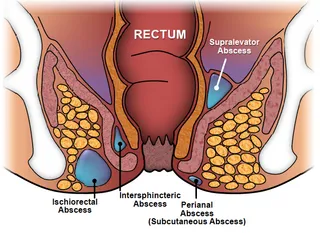
- An abscess that was drained but never fully explored — around a third of anorectal abscesses go on to become fistulas, and an inadequate initial drainage sets that up.
- Premature skin healing — the outside closed over while the deep track was still open, converting an open drain into a sealed pocket.
- Timid surgery, for the right reason — a surgeon correctly wary of cutting sphincter did too little, and the fistula persisted.
- Undiagnosed underlying disease — Crohn’s disease or anal tuberculosis, or rarely HIV-related immunosuppression. In these patients the surgery was fine; the biology was never addressed.
- Uncontrolled diabetes or ongoing smoking, both of which measurably impair healing in perianal wounds.
Notice that only one of these is a technical error in the operating theatre. Most recurrences are mapping failures or diagnosis failures — which is precisely why the answer is better imaging and a broader workup, not simply a more aggressive knife.
What Makes a Fistula “High Complexity”?
A fistula is complex when the track crosses more than about a third of the sphincter complex, when there are multiple or horseshoe tracks, when it is recurrent, anterior in a woman, associated with Crohn’s or TB, or when there is any pre-existing incontinence. Complex fistulas carry a real risk to continence and must not be treated with a simple lay-open (fistulotomy).
Using the Parks classification, most simple fistulas are intersphincteric or low trans-sphincteric — these heal well with straightforward surgery. The ones that recur tend to be:
| Type | Why it is difficult |
|---|---|
| High trans-sphincteric | Track crosses a large amount of external sphincter — laying it open risks incontinence |
| Suprasphincteric | Passes above the entire sphincter complex before descending |
| Extrasphincteric | Often secondary to bowel disease, trauma or previous surgery — must treat the cause |
| Horseshoe | Curves around the anal canal on both sides; side limbs are easily missed |
| Anterior fistula in a woman | Very little sphincter bulk anteriorly, especially after childbirth — low tolerance for any division |
| Crohn’s / tubercular fistula | Will not heal on surgery alone; needs medical therapy in parallel |
When Should You Get a Second Opinion?
Get a second opinion after two or more failed operations, if you have been advised a procedure that will divide significant sphincter, if no MRI fistulogram has ever been done, if you have any leakage of gas or stool, or if nobody has clearly explained why the last surgery failed.
Concrete triggers, in plain terms:
- Two or more previous fistula surgeries. Statistically, the chance that a third identical attempt works is not good.
- No MRI has ever been performed. Operating on a redo fistula without imaging is working blind through scar tissue.
- You have been told you may lose some control. Before accepting that, get a sphincter-preserving assessment.
- You already have some incontinence — urgency, staining, gas leakage. This changes the entire surgical plan.
- You have diarrhoea, weight loss, mouth ulcers or joint pains alongside the fistula. That combination needs a colonoscopy, not another operation.
- Nobody has drawn you a diagram of your own fistula. If your surgeon cannot sketch where the track runs and where the internal opening sits, the plan is not specific enough yet.
Asking for a second opinion is a normal and professional part of surgical care. Any surgeon confident in their plan will hand over your notes without hesitation.
What Should a Proper Second Opinion Actually Involve?
A genuine second opinion is a re-mapping exercise: previous operation notes reviewed, an MRI fistulogram obtained, an examination under anaesthesia if needed, continence formally assessed, and underlying disease excluded — before any new operation is proposed.
Expect the consultation to include:
1. Reading your history properly. Bring every discharge summary and operation note. Which procedure was done, was a seton used, how long did healing last before recurrence — each answer narrows the diagnosis.
2. MRI fistulogram. A dedicated pelvic MRI maps the track, its relationship to the internal and external sphincter, the internal opening, and any hidden abscess or side branch. For recurrent fistula this is not optional. Read more in our guide to how an anal fistula is diagnosed.
3. Continence assessment. A formal score (such as the Wexner score) documents where you stand before surgery. Without a baseline, nobody can tell later whether an operation caused a change.
4. Examination under anaesthesia (EUA), when the anatomy remains unclear. Often combined with placement of a draining seton in the same sitting.
5. Excluding underlying disease. For repeatedly recurrent fistulas: colonoscopy with biopsy for Crohn’s, and appropriate tests for tuberculosis — which remains genuinely common in India and is regularly missed as a cause of a “stubborn” fistula.
6. A written plan with stages. Complex fistula treatment is frequently a two-stage process, and you should be told that at the outset rather than discovering it midway.
What Are the Sphincter-Preserving Options for Redo Surgery?
For recurrent and complex fistulas the goal is cure without incontinence. The main sphincter-preserving techniques are the draining seton (as a first stage), LIFT, VAAFT, laser closure (FiLaC) and advancement flaps. These are compared in more detail in our post on minimally invasive fistula surgery — LIFT, VAAFT and FiLaC.
| Technique | What it does | Best suited to |
|---|---|---|
| Draining seton (stage 1) | Soft thread keeps track draining while inflammation settles | Almost every complex or recurrent fistula, as preparation |
| LIFT | Ligates the track in the intersphincteric plane | Well-defined trans-sphincteric tracks with a mature, fibrous track |
| VAAFT | Endoscope visualises the track from inside, then ablates it | Fistulas with uncertain anatomy or suspected side branches |
| FiLaC (laser closure) | Radial laser fibre seals the track from inside | Narrow, straight tracks; minimal sphincter risk |
| Advancement flap | Healthy rectal tissue is mobilised to cover the internal opening | High fistulas, anterior fistulas in women, recurrent cases |
| Staged fistulotomy with cutting seton | Gradual division over weeks | Reserved for selected cases — carries the highest continence risk |
A realistic expectation: healing rates for sphincter-preserving redo procedures generally sit between 60 and 85 percent per attempt. Any surgeon guaranteeing 100 percent cure on a third-time fistula is not being straight with you. What a good plan improves is the odds per attempt and, critically, that you keep your continence while trying.
Why Staged Treatment Is Often the Right Answer
Patients understandably want it done in one sitting. But in a fistula that has already failed twice, the tissue is inflamed and scarred, and closure attempted in that environment usually fails again.
A typical staged plan:
- Stage 1 (day 0): EUA, drainage of any collection, draining seton placed. The discharge stops collecting; pain settles within days.
- Interval (6–12 weeks): Inflammation resolves, the track matures into a defined fibrous tube, diabetes and nutrition are optimised, and underlying disease is investigated.
- Stage 2: Definitive sphincter-preserving procedure chosen on the now-clear anatomy.
It feels slower. It is substantially more likely to work.
When to Seek Care Urgently
See a doctor within 24–48 hours if you develop:
- Increasing perianal pain with fever or chills
- A tense, tender swelling near the anus (an abscess needs drainage, not antibiotics alone)
- Sudden increase in discharge or bleeding
- Difficulty passing urine alongside perianal pain
- Any new leakage of gas or stool
Perianal sepsis in a diabetic patient can progress rapidly and should never be managed on oral antibiotics at home.
Related Reading
A discharging opening near the tailbone is not always a fistula. If your recurring problem sits in the natal cleft above the anus rather than beside it, the diagnosis may be pilonidal disease — a condition with its own pattern of recurrence and a different set of redo operations. See recurrent pilonidal sinus after failed surgery, and how to tell pilonidal sinus and anal fistula apart if you are not sure which one you have. The same “why did it come back?” reasoning applied to hernia repair is covered in why hernias come back.
Why Patients Come to Sharvari Hospital for Redo Fistula Care
A significant proportion of the fistula work at Sharvari Hospital is second-opinion and redo surgery — patients who have already had one, two or three procedures elsewhere.
- Imaging before operating. Every recurrent fistula gets an MRI fistulogram and a documented map before a plan is offered.
- Continence protected as the first priority. We formally score continence before surgery and prefer staged, sphincter-preserving strategies over aggressive one-shot attempts.
- Underlying disease actively excluded — colonoscopy and TB workup where the pattern warrants it, because no amount of surgery cures a tubercular fistula.
- Honest staging. If your fistula needs two operations three months apart, we tell you that at the first consultation, not the third.
- 19+ years of surgical experience under Dr. Kundan Kharde (MBBS, MS – General Surgery, FMAS), with patients travelling from Wakad, Hinjewadi, Baner, Aundh, Tathawade, Ravet and across PCMC and Pune.
Bring your previous operation notes and MRI films to your consultation:
- 📞 Call: +91 951 951 1928
- 💬 WhatsApp: +91 951 951 1928
- 📍 Sharvari Hospital, Wakad / Pimple Nilakh, Pune — 411027
- ✉️ [email protected]
Precise Surgery, Swift Recovery.
Written and medically reviewed by Dr. Kundan Kharde, MBBS, MS (General Surgery), FMAS — Founder & Lead Surgeon, Sharvari Hospital, Wakad, Pune. This article is general information and does not replace an in-person proctology assessment.