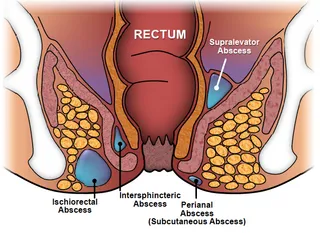
A complex anal fistula is not a moral label—it is a safety label. It means the tract is harder to heal with a simple operation, often because it involves more muscle, has branches, comes back after prior surgery, or is tied to inflammatory bowel disease (IBD). Specialists focus on staging, mapping, and continence protection rather than rushing a one-day “cure.” This article walks through how experienced teams think, why MRI appears more often in these cases, and how setons fit the roadmap. For how tests are chosen, read how anal fistula is diagnosed. For the full service overview, use fistula treatment Pune and book online. Proctology care is available at Sharvari Hospital, Pune. If your case is high, multi-tract or already operated, see the dedicated page on complex fistula treatment at Sharvari Hospital.
Medically reviewed by Dr. Kundan Kharde, MS, FMAS — Senior Proctologist at Sharvari Hospital, Pune. View profile.
What makes a fistula “complex”
High tracts, branches, recurrence, scarring
High fistulas travel through more sphincter muscle, so dividing muscle blindly raises incontinence risk. Branches mean one operation may miss a side tunnel. Recurrence and scar distort normal planes, making repeat surgery technically harder.
Active inflammation and special conditions
Crohn’s perianal disease behaves differently from a typical cryptoglandular fistula. Active inflammation can block healing even when surgery is technically correct. Tuberculosis, prior radiation, and other illnesses also change planning.
Why imaging is used more often here
MRI for extensions
MRI is commonly used to map length, height, collections, and branches before major repair. It helps the team choose between seton, flap, LIFT, VAAFT, laser, or combined approaches. Patient-friendly context lives in our diagnosis article.
Planning before major intervention
Operating without a map in complex cases increases recurrence and harm. Your surgeon will explain whether ultrasound or MRI is preferred at your centre.
Staged treatment: what patients should expect
Drainage and infection control first
If there is an abscess, drainage comes first. Antibiotics help infection but do not replace drainage when pus is trapped.
Setons and interval procedures
A seton is a thread loop that keeps the tract open for drainage while inflammation settles or while medical therapy works. It is a tool, not a failure. Later steps may remove or replace it as part of definitive repair.
Sphincter-sparing strategies (overview)
LIFT, flap, video-assisted, laser roles
Specialists match tools to anatomy:
- LIFT for suitable intersphincteric segments
- Advancement flap to cover the internal opening in selected high cases
- VAAFT when endoscopic mapping helps—VAAFT page
- FiLaC/laser in selected cases—FiLaC page
Compare options: LIFT, VAAFT, FiLaC compared.
When traditional fistulotomy is unsafe
For many high fistulas, classic fistulotomy is not offered because continence risk is too high. If someone promises otherwise without discussion, seek a second opinion.
Crohn’s disease: a different roadmap
Medical therapy coordination
Gastroenterologists may adjust biologics or other therapy to quiet inflammation before or between surgical steps. Surgery may still be needed for sepsis or symptom control.
Surgery timing principles (high level)
Urgent drainage for abscess, elective definitive repair when inflammation and nutrition are optimised—individual timelines vary.
Recovery and follow-up in complex cases
Longer timelines
Healing may take weeks to months with staged steps. Office visits track drainage, pain, and function.
Warning symptoms
Fever, rapid swelling, heavy bleeding, urinary retention, or new incontinence need urgent contact with your team.
Seton: what it feels like in daily life
Patients sometimes worry that a seton will be unbearable. Many people adapt with hygiene, pads if needed, and time. The seton is meant to prevent dangerous pocketing of pus while inflammation improves or while medical therapy works. It may feel odd at first during wiping or bathing, but teams can advise comfort strategies. If the seton tightens painfully or drainage suddenly changes, call your clinic—those are review triggers, not “wait and see” moments.
Nutrition and lifestyle in complex healing
While surgery leads the plan, soft stools and good protein intake support healing. Smoking remains a negative factor for tissue repair. If you have diarrhoea from IBD, coordination with your gastroenterologist can be as important as the surgical step. These basics do not replace procedures, but they stack the odds in your favour.
Getting help in Pune
What to bring to consultation
Bring prior operation notes, MRI discs/reports, a list of medicines, and notes on bowel habits. Honest symptom history speeds safe planning.
Escalation paths for recurrent disease
If you have multiple prior failures, ask about imaging-first planning and multidisciplinary input for IBD. The fistula treatment Pune hub links education with book online.
Multidisciplinary letters: what to carry
If you see gastroenterology, nutrition, or rheumatology, bring summaries and medicine lists to surgical visits. A one-page timeline of biologics, steroids, and antibiotics prevents dangerous gaps. If you receive immunosuppression, your surgical timing may shift—this is normal coordination, not delay for delay’s sake.
Sexual health and privacy
Perianal surgery can affect comfort with intimacy for a while. Ask your surgeon when it is reasonable to resume and what positions or activities to avoid early. Problems like painful erections unrelated to surgery, or new urinary symptoms, should be mentioned—sometimes they are linked to pelvic tension or medication side effects worth sorting out.
Why “one-shot cure” marketing fails complex patients
Complex fistulas behave like chronic conditions even when surgery is excellent. Inflammation, scar, and anatomy can require iterative care. Marketing that promises a single visit cure may set you up for shame if another step is needed. A specialist approach embraces staging without blaming the patient.
If your fistula has already returned after two or more operations, the next step is a re-mapping exercise rather than a third attempt at the same procedure. See our guide to getting a second opinion on a recurrent or high-complexity fistula.
Nutrition: protein and wound healing
Malnutrition slows healing. If appetite is low, discuss high-protein snacks and meal timing with your team. Diabetes control matters—high glucose invites infection. Vegetarian patients can still meet protein needs with planning; ask for dietitian referral if weight is dropping.
Mental health supports worth mentioning
Chronic perianal problems affect mood, sleep, and relationships. If you feel depressed or anxious, tell your doctor—some hospitals can link counselling. Addressing mental health improves adherence to dressings and follow-up.
Advanced imaging: MRI vs ultrasound in patient terms
MRI shows a big picture of tracts and abscess pockets. Endoanal ultrasound can be office-based and excellent for some maps. Your centre chooses based on availability, expertise, and your anatomy. Neither test should be repeated endlessly without reason.
Common questions (FAQ)
What is considered a complex fistula?
Often high tracts, branches, recurrence, prior surgery, or IBD—your surgeon classifies after mapping.
Is complex fistula surgery risky?
Real risks exist; experienced teams emphasise continence protection and staging.
How long does complex fistula treatment take?
Weeks to months is common with staged care; timelines are personal.
Do complex fistulas need MRI?
Often yes to map tracts and collections safely.
Can laser treat complex fistula?
Sometimes as part of a combined plan—not always alone.
Sources
- American Society of Colon and Rectal Surgeons — Anal abscess and fistula: https://fascrs.org/Web/Web/Patients/Diseases-and-Conditions/A-Z/Abscess-and-Fistula-Expanded-Information.aspx
- ECCO (European Crohn’s and Colitis Organisation) — guideline portal: https://ecco-ibd.eu/publications/ecco-guidelines.html
- Crohn’s & Colitis Foundation — resources: https://www.crohnscolitisfoundation.org/
- NHS — Anal fistula: https://www.nhs.uk/conditions/anal-fistula/
- StatPearls — Anal fistula: https://www.ncbi.nlm.nih.gov/books/NBK563061/