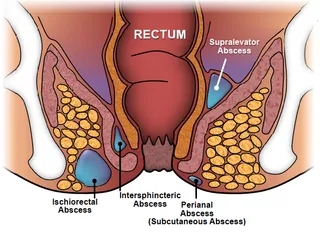
Very few surgical problems demoralise a young patient the way a returning pilonidal sinus does. (A recurring discharge closer to the anus is usually a different problem — see fistula treatment in Pune.)
You took leave from work. You sat through weeks of dressings. You were told it was a small procedure and that it would not trouble you again. And then, months later, there is a familiar dampness on the underwear, a tender lump near the tailbone, and the sinking feeling that you are back at the beginning.
Here is the honest position, and it is the one I give patients in my clinic: a pilonidal sinus that has come back is not usually a sign that your first surgeon did something wrong. It is usually a sign that the operation treated the sinus but did not treat the cleft that created it. Getting that distinction right is the whole basis of a successful second attempt.
This guide explains why recurrence happens, how to tell a true recurrence from a wound that simply never healed, which redo procedures actually work, and — importantly — when the heavily advertised laser option is not the right answer.
If you are still trying to understand the basics of the condition, start with our complete pilonidal sinus guide and our pilonidal sinus treatment page. This article assumes you have already had at least one operation.
Why Does a Pilonidal Sinus Come Back After Surgery?
A pilonidal sinus recurs when the underlying cause is still present. The disease is driven by loose hair being pushed into a deep, moist, midline natal cleft. If pits are left behind, a side branch is missed, the wound is closed under tension in the midline, or hair keeps re-entering the cleft, the sinus re-forms — no matter how neatly the original tissue was excised.
In patients who come to us after a failed operation, the reasons cluster into a short and fairly predictable list:
- Residual midline pits. The main sinus was dealt with, but one or two small pits a centimetre away were not, and they became the seed of the new disease.
- Missed lateral or deep extensions. Pilonidal disease often runs sideways under intact-looking skin. If a side track or cavity was not laid open, infection continues quietly beneath a healed surface.
- Midline closure under tension. Closing a wound directly in the depth of the cleft places it in the worst possible environment: constant movement, constant moisture, poor oxygenation. Midline scars break down at a notoriously high rate.
- Continuing hair load. Thick, coarse hair over the sacrococcygeal region keeps supplying the raw material for the disease. Surgery removes the sinus; it does not remove the hair.
- Patient-side risk factors. Obesity, a deep natal cleft, prolonged unbroken sitting, sweating, smoking and poor local hygiene each independently increase the chance of recurrence.
- Premature discharge from follow-up. Wounds that “looked almost healed” at week three are frequently the ones that break down at week six.
The insight that changed pilonidal surgery worldwide is simple: the deep midline cleft is the disease. The sinus is only its symptom. Operations that flatten or lateralise the cleft outperform operations that merely excise tissue.
Is My Wound Simply Not Healing, or Has the Sinus Actually Recurred?
These are two different problems. A persistent wound is one that never closed at all after the operation and has been discharging continuously. A true recurrence is a wound that healed completely for weeks or months, after which a fresh pit, swelling or discharge appeared. Persistent wounds are usually a healing problem; recurrences are usually a disease-control problem.
The distinction changes the whole plan, so it is worth being precise when you describe your history to a surgeon.
| Feature | Persistent / non-healing wound | True recurrence |
|---|---|---|
| Timeline | Never fully closed since surgery | Healed fully, then broke down later |
| Typical interval | Ongoing from day one | Weeks to years after healing |
| Usual causes | Wound tension, infection, poor nutrition, diabetes, smoking, inadequate dressing technique | Residual pits, missed side branch, continuing hair entry, deep cleft |
| First step | Wound assessment, culture, optimise sugar/nutrition, correct dressing protocol | Re-map the disease, plan a definitive cleft-flattening procedure |
| Surgery needed? | Not always — many close with correct wound care | Usually yes |
If your wound has been open for more than six to eight weeks, it deserves a formal reassessment rather than another month of dressings. Our guide on delayed recovery after surgery covers the systemic factors — anaemia, uncontrolled diabetes, low protein intake, smoking — that quietly stall healing.
One more possibility must always be excluded: a discharging opening near the tailbone is not automatically pilonidal. A low anal fistula can present in a very similar way, and the treatment is entirely different. We explain how to tell them apart in pilonidal sinus vs anal fistula.
What Is the Actual Recurrence Rate After Each Type of Pilonidal Surgery?
Recurrence rates vary widely by technique and, critically, by how long patients are followed. Flap procedures such as the Limberg and Karydakis repairs show the lowest long-term recurrence. Minimally invasive pit picking shows the highest recurrence at five years. Laser closure sits in between, with good early results that decline over time. Any quoted figure should always include its follow-up period.
| Technique | What it does | Reported recurrence | Best suited to |
|---|---|---|---|
| Pit picking / EPSiT | Removes pits, cleans track endoscopically | Low early; markedly higher at 5 years | Limited, primary disease in motivated patients |
| Laser closure (SiLaC / pit excision + laser) | Ablates the track lining | Low early; rises over several years of follow-up | Small number of pits, no large cavity |
| Karydakis flap | Excises disease, moves the scar off the midline | Low | Moderate disease, moderate cleft depth |
| Limberg / rhomboid flap | Fills the defect with a rotated flap, flattens the cleft | Among the lowest reported | Extensive, recurrent or wide disease |
| Bascom cleft lift | Reshapes the cleft, lateral scar, minimal tissue loss | Low | Recurrent disease and deep clefts |
| Wide excision, healing by secondary intention | Leaves the wound open to granulate | Moderate | Grossly infected disease; needs months of dressings |
Two lessons come out of this table, and both matter to you as a patient who has already failed one operation.
First, any technique looks excellent at six months. When you are comparing options — or comparing hospitals — ask specifically about results at three to five years.
Second, the more times a pilonidal sinus has recurred, the more the balance shifts away from minimally invasive options and towards a definitive cleft-flattening procedure. A second small operation that fails costs you far more leave, money and morale than one properly chosen definitive repair.
Is Laser the Right Answer for a Recurrent Pilonidal Sinus?
Often it is not, and this is where patients are most frequently misled. Laser closure is genuinely excellent for a limited pilonidal sinus with a few midline pits and no significant cavity. For scarred, wide, multiply-operated disease with a deep natal cleft, laser alone has a high failure rate because it treats the track while leaving the cleft — the actual cause — untouched.
I say this as a surgeon who performs laser procedures routinely and believes in them. Laser is a tool, not a philosophy. Used in the right anatomy it gives a small wound, minimal pain and a quick return to work. Used in the wrong anatomy it buys you six comfortable months and a third recurrence.
Laser is reasonable for recurrent disease when:
- there are only one or two residual midline pits
- the surrounding tissue is soft, with little scarring
- there is no large cavity or sizeable lateral extension
- the natal cleft is not unusually deep
- you are willing to commit to laser hair reduction afterwards
Laser is usually the wrong choice when:
- the region is heavily scarred from previous wide excision
- there is a broad cavity or multiple side branches
- this is your second or third recurrence
- you have a very deep cleft with skin that stays macerated
- the wound has never truly healed since the first operation
In those situations, a Bascom cleft lift or a Limberg flap is the honest recommendation, even though it means a slightly bigger operation. Choosing the smaller procedure to keep the sales pitch attractive is not a service to the patient.
Which Redo Operation Will Be Chosen for Me, and How Is That Decided?
The choice depends on how much tissue has already been removed, how deep and moist the natal cleft is, how much scarring exists, whether there is an active cavity or abscess, and your body habitus and occupation. A good redo plan is made after clinical mapping of every pit and track — not from a menu of procedures offered before examination.
At the consultation, a proper redo assessment should include:
- A full history of the previous operations — what was done, whether the wound ever healed, how long it stayed healed, and what the discharge is like now.
- Careful examination of the whole natal cleft, identifying every pit, side opening and area of induration, and assessing cleft depth and skin quality.
- Exclusion of an anal fistula by proctological examination — essential, and frequently skipped.
- Imaging where indicated. MRI or ultrasound is not needed for every case, but it earns its place when disease is extensive, when deep or lateral extensions are suspected, or when a fistula must be ruled out.
- Assessment of healing capacity — blood sugar/HbA1c, haemoglobin, nutritional status and smoking history all shape the odds.
- A staged plan if there is active infection. An inflamed, abscessed cleft should be drained and settled first. Definitive flap surgery on infected tissue is asking for a third failure.
If a surgeon offers you a specific named procedure before examining you, treat that as a warning sign. So should the absence of any conversation about hair control afterwards.
How Do I Stop It Coming Back a Third Time?
Surgery removes the disease; aftercare prevents its return. The most effective single measure is laser hair reduction over the natal cleft, supported by keeping the area clean and dry, breaking up long periods of sitting, reducing weight where relevant, stopping smoking, and continuing follow-up until the wound is durably healed rather than merely closed.
A practical, evidence-aligned prevention checklist:
- Laser hair reduction over the sacrococcygeal region, typically a course of sessions starting once the wound has healed. Shaving is a poor substitute — it produces short, sharp stubble that penetrates skin more easily.
- Keep the cleft dry. Wash and dry thoroughly after bathing and after exercise; change out of sweaty clothing promptly.
- Interrupt prolonged sitting. For the software and IT professionals we see from Hinjawadi and Wakad, this is the single most modifiable factor — a two-minute stand every forty minutes genuinely helps, and a two-wheeler commute on rough roads adds to the load.
- Weight reduction where the BMI is raised, which reduces both cleft depth and moisture.
- Stop smoking before surgery, not after. Nicotine measurably impairs flap healing.
- Attend every follow-up. Most late breakdowns happen in patients who stopped coming once the wound “looked fine”.
- Report the first sign early. A tiny pit treated early is a minor procedure; a neglected one becomes an abscess. Our post on wound care after surgery covers dressing technique in detail.
For patients living in Wakad, Pimple Nilakh, Tathawade, Punawale or Baner, there is a practical advantage to having redo pilonidal surgery close to home: this is a condition that needs genuine follow-up, sometimes weekly for a few weeks. Patients who travel across the city for dressings tend to skip appointments — and skipped appointments are exactly how a recurrence goes unnoticed.
When Should I See a Doctor Urgently?
Seek prompt medical attention if you develop increasing pain and swelling near the tailbone, fever, redness spreading into the surrounding skin, foul-smelling or blood-stained discharge, an inability to sit, or if you are diabetic or immunosuppressed and notice any new discharge. These suggest an abscess or spreading infection, which needs drainage rather than antibiotics alone.
Red flags that should not wait for a routine appointment:
- Fever with a tender, hot, fluctuant swelling — likely a pilonidal abscess
- Rapidly spreading redness, especially in a diabetic patient
- Severe pain that prevents sitting or sleeping
- Bleeding from the sinus opening
- A long-standing, repeatedly recurring sinus with a changing appearance or non-healing ulcer — rare, but chronic pilonidal disease of very long duration warrants examination and, occasionally, biopsy
A pilonidal abscess is drained, not treated with tablets. Delaying drainage enlarges the eventual cavity and worsens the odds for the definitive repair later.
What Does Redo Pilonidal Sinus Surgery Cost in Pune?
In the Pune and PCMC market, pilonidal procedures broadly range from about Rs 35,000 to Rs 1,10,000. Minimally invasive and laser procedures occupy the lower and middle bands, while flap and cleft-lift repairs sit at the upper end because they take longer and require specific expertise. Most pilonidal surgery is insurance-covered because it treats a disease, not a cosmetic concern.
| Procedure | Indicative Pune range (2026) | Notes |
|---|---|---|
| Pit picking / EPSiT | Rs 35,000 – 55,000 | Limited disease; day-care |
| Laser closure (SiLaC) | Rs 45,000 – 90,000 | Day-care; unsuitable for large cavities |
| Karydakis flap | Rs 55,000 – 95,000 | Short admission usually needed |
| Limberg / rhomboid flap | Rs 65,000 – 1,10,000 | Longer procedure, highest expertise |
| Wide excision, secondary healing | Rs 35,000 – 60,000 | Lower surgical cost, but months of dressings add up |
These are indicative market ranges, not a quotation. The final figure depends on the extent of disease, anaesthesia, admission duration, room category and whether the procedure is day-care. On insurance: pilonidal excision and flap repairs are generally approved as cashless, though room-rent capping in your policy can change your net payable, and some insurers scrutinise laser procedures more closely than conventional excision. Ask for a written estimate before admission — any hospital that will not give you one in writing has told you something important.
Why Choose Sharvari Hospital for a Recurrent Pilonidal Sinus
Recurrent pilonidal disease is a specialist problem. It rewards careful mapping, an honest choice of procedure, and disciplined follow-up — and it punishes a quick, under-planned second attempt.
- Specialist-led, not corporate-led. Dr. Kundan Kharde (MBBS, MS – General Surgery, FMAS) personally assesses, operates and follows up every complex proctology case, with 19+ years in practice.
- The full range of options, honestly applied. We offer laser and minimally invasive techniques and cleft-lift and flap repairs — which means we have no incentive to fit your anatomy to a single procedure.
- Written estimates and transparent insurance guidance before admission, with cashless facilities for major insurers.
- Genuine follow-up. Dressings, wound review and prevention planning, including guidance on laser hair reduction, until the wound is durably healed.
- Convenient for PCMC. Located in Wakad / Pimple Nilakh, easily reached from Hinjawadi, Baner, Aundh, Tathawade, Punawale, Ravet, Balewadi and Pimple Saudagar — which matters when follow-up is weekly.
- 240+ Google reviews from patients across Pune and PCMC.
Book a Redo Pilonidal Assessment
Bring your previous operation notes, discharge summary and any scans. They tell us what has already been done and stop us from repeating it.
- Phone / WhatsApp: +91 951 951 1928
- Email: [email protected]
- Address: Sharvari Hospital, Wakad / Pimple Nilakh, Pune – 411027
- Online: Book a consultation | Meet Dr. Kundan Kharde
Written by the surgical team at Sharvari Hospital, Wakad, Pune. Medically reviewed by Dr. Kundan Kharde, MBBS, MS (General Surgery), FMAS — General & Laparoscopic Surgeon and Proctologist. Last reviewed: 26 August 2026.
This article is for patient education and does not replace individual medical advice. Treatment of recurrent pilonidal sinus must be planned after clinical examination.