Most patients who walk into my clinic with an anal fistula have already tried two or three antibiotic courses, had one or two abscess drainages, and — somewhere on the internet — read about “laser fistula surgery.” They arrive with the same three questions:
- How does it actually work?
- How long will I be out of action?
- Does it really work — or will the fistula come back?
This guide answers all three in plain language. By the end, you’ll know exactly what laser fistula surgery involves, what a realistic recovery timeline looks like, and how to read the success-rate numbers you see online without getting misled.
What Is a Fistula — and Why Traditional Surgery Can Feel Scary
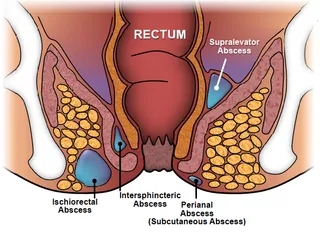
An anal fistula is an abnormal tunnel that forms between the inside of the anal canal and the skin around the anus. It almost always begins as an infected anal gland that doesn’t fully heal after drainage.
For decades, the standard treatment was fistulotomy — cutting open the entire tract from end to end. It works well for low, simple fistulas, but it involves dividing some of the sphincter muscle. For patients with higher or more complex tracts, that raised a real worry: will I have continence problems afterwards?
That fear — plus the open wound, the long dressings, and the weeks of sitz baths — is what drives so many patients to look for laser fistula surgery as a gentler alternative. The good news is that when it’s the right technique for the right fistula, laser surgery is genuinely one of the most comfortable fistula operations available today.
What Exactly Is Laser Fistula Surgery?
Laser fistula surgery is an umbrella term. Most commonly in India and in Pune clinics, it refers to FiLaC (Fistula-tract Laser Closure) — a procedure in which a thin, flexible radial laser fibre is introduced along the fistula tract and energy is delivered in a controlled way to seal the tract from the inside.
Instead of cutting the tract open, the surgeon:
- Cleans and maps the tract with a fine probe
- Passes a radial laser fibre through it
- Slowly withdraws the fibre while delivering controlled thermal energy
- Allows the treated lining to shrink, close, and eventually heal as scar tissue
Critically, the sphincter muscle is not cut. That’s the single biggest reason laser fistula surgery has become so popular among patients worried about continence.
For a deeper technical read, see the dedicated FiLaC laser fistula surgery page. If you’re comparing options, the LIFT vs VAAFT vs FiLaC comparison is a useful next read.
Causes: Why Fistulas Form in the First Place
Understanding the cause helps you understand why laser treatment targets the tract rather than a single point:
- Anal gland infection — by far the most common cause (cryptoglandular origin)
- Untreated or recurrent perianal abscess
- Chronic constipation or straining that injures the anal lining
- Inflammatory bowel disease such as Crohn’s disease
- Tuberculosis of the anorectum (still relevant in India)
- Post-surgical or post-radiation changes
- Diabetes and other conditions that impair wound healing
Identifying the underlying cause matters — in Crohn’s disease or TB, for example, surgery alone is rarely enough.
Symptoms That Make Patients Consider Surgery
Most patients come in with some combination of:
- A small opening near the anus that leaks pus, blood, or faecal matter
- Recurrent boils or abscesses in the same area
- Pain while sitting, walking, or passing stool
- Staining of undergarments with discharge
- A firm, cord-like tract that can sometimes be felt under the skin
- Itching or skin irritation around the external opening
If these symptoms have persisted for weeks or months, the fistula will not close on its own — a realistic read we cover in fistula treatment without surgery: is it possible?.
Diagnosis Before Laser Surgery
One thing I stress to every patient: laser fistula surgery only works if the tract is mapped correctly. Before I touch a laser fibre, I want to know exactly where the tract runs, where the internal opening sits, and whether there are hidden side branches.
Typical workup at Sharvari Hospital:
- Clinical examination — including gentle digital rectal examination
- Proctoscopy / video proctoscopy — to see the internal opening
- Fistula probe examination under anaesthesia when needed
- MRI fistulogram — the gold standard for complex, recurrent, or high fistulas
- Endoanal ultrasound in selected cases
A rushed mapping is the single biggest reason fistula surgeries fail — laser or otherwise. How the MRI map decides between lay-open, laser and a hybrid of the two — with a real mapped case — is shown in MRI fistula mapping.
The Laser Fistula Surgery Procedure: Step by Step
Here is what a typical FiLaC-style laser fistula procedure looks like in our operation theatre:
- Anaesthesia — usually spinal anaesthesia or short general anaesthesia. You feel nothing.
- Positioning — lithotomy or prone jackknife, whichever gives the best access to your tract.
- Examination under anaesthesia — the surgeon confirms the anatomy once more, because it is often clearer when the muscles are relaxed.
- Cleaning of the tract — a curette or brush is gently passed through the tract to remove granulation tissue and debris.
- Management of the internal opening — often closed with a small absorbable stitch or a mucosal flap, depending on the anatomy.
- Laser fibre insertion — a thin radial laser fibre is introduced from the external opening.
- Controlled energy delivery — the fibre is withdrawn slowly at a fixed rate while energy is delivered in 360° around the tract wall.
- Final inspection — the surgeon confirms closure and places a light dressing. Usually no large wound is created.
Total operating time is typically 30 to 60 minutes, depending on the tract. Most patients are in day-care admission and go home the same day or next morning.
Recovery: What the Days and Weeks After Look Like
This is where laser fistula surgery really shines compared to traditional fistulotomy. For a full daily breakdown, see our fistula surgery recovery day-by-day timeline. Here is the short version:
- Day 0 (surgery day): Mild discomfort, manageable with oral painkillers. Most patients walk out of hospital the same evening or the next morning.
- Day 1–3: Soft stool, warm sitz baths 2–3 times daily, light diet with fibre. Most desk-based patients find they can work from home by day 2 or 3.
- Day 4–7: Back to office work, driving short distances, gentle walking. Discharge from the external opening gradually reduces.
- Week 2: Most normal activities resume. Heavy lifting and intense gym training still restricted.
- Week 3–6: Complete tissue healing as the treated tract fibroses and closes.
Compared with open fistulotomy — which can need 4 to 8 weeks of dressings — laser fistula surgery typically offers a much shorter, much less painful recovery.
Success Rate of Laser Fistula Surgery — The Honest Numbers
Online, you’ll see success rates quoted anywhere from 65% to 95% for laser fistula surgery. Both numbers can be true — and both can be misleading — because studies differ in:
- How they define success (closure at 6 weeks vs no drainage at 12 months vs no recurrence at 2 years)
- What type of fistulas were included (simple low vs complex high vs recurrent)
- Follow-up duration (short follow-up inflates success figures)
A realistic, evidence-informed summary — the one I give patients in clinic — looks like this:
- For simple, correctly mapped tracts in well-selected patients, laser fistula surgery has healing rates broadly comparable to sphincter-sparing alternatives like LIFT and VAAFT in the medium term.
- For complex, recurrent, or high trans-sphincteric fistulas, success rates drop, and more than one procedure may be needed.
- Crohn’s-related fistulas behave differently and need combined medical-surgical management.
We go deeper into how to read those percentages safely in fistula surgery success rate: what the data says.
The most important predictor of long-term success isn’t laser vs non-laser — it’s accurate mapping plus experienced decision-making.
When Laser Fistula Surgery Is the Right Choice
Laser fistula surgery tends to work best for:
- Simple, low trans-sphincteric fistulas
- First-presentation fistulas with a single, well-defined tract
- Patients particularly worried about continence
- Working professionals who need a fast return to desk jobs
- Selected recurrent cases where the anatomy is favourable
It is usually not the first choice for:
- Very high, horseshoe, or multi-tract fistulas
- Active Crohn’s disease or TB fistulas before medical optimisation
- Fistulas where the internal opening cannot be clearly identified
In those situations, LIFT, VAAFT, mucosal advancement flap, or staged seton treatment may be a safer path. Choosing honestly between techniques — rather than selling one — is what good proctology looks like.
Lifestyle Tips for a Smooth Recovery
To give yourself the best chance of first-time healing after laser fistula surgery:
- Keep stools soft with fibre, water, and prescribed stool softeners
- Take warm sitz baths 2–3 times daily for the first 1–2 weeks
- Clean gently with lukewarm water instead of dry wiping
- Avoid heavy lifting, squats, and long cycling rides for 3–4 weeks
- Control blood sugar strictly if you have diabetes
- Take antibiotics and pain medication exactly as prescribed
- Attend all follow-up visits so we can catch early signs of recurrence
When to See a Specialist
Book a specialist consultation if you have:
- A persistent opening near the anus that leaks fluid or pus
- Recurrent perianal abscesses
- A fistula previously operated that has reopened
- Fistula symptoms along with diarrhoea, weight loss, or known IBD
- A fistula and diabetes — healing is less forgiving and needs careful planning
Don’t keep waiting for it to “settle on its own.” Fistulas rarely do.
Why Choose Sharvari Hospital for Laser Fistula Surgery
At Sharvari Hospital, Wakad / Pimple Nilakh, Pune, we offer the full range of modern fistula techniques — laser (FiLaC), VAAFT, LIFT, advancement flap, and traditional surgery — and we choose the one that genuinely fits your anatomy.
Dr. Kundan Kharde, MBBS, MS (General Surgery), FMAS, brings 19+ years of surgical experience as a dedicated specialist in proctology and minimally invasive surgery. His approach is simple: precise mapping first, then the least invasive technique that can realistically cure your fistula.
What patients value about us:
- Careful MRI-backed mapping before any laser procedure
- Advanced laser fistula surgery under a “Precise Surgery, Swift Recovery” protocol
- Day-care admission — most patients go home the same day
- Transparent pricing and cashless insurance support
- 240+ Google reviews from real local patients
- Strict confidentiality and a judgment-free clinic environment
📞 Call or WhatsApp: +91 951 951 1928 📧 Email: [email protected] 📍 Location: Sharvari Hospital, Wakad / Pimple Nilakh, Pune — 411027
If you’ve been living with a fistula for months, it’s worth one proper consultation. Laser fistula surgery might be the right answer for you — or it might not. Either way, you deserve a clear plan, not another antibiotic course.
Frequently Asked Questions
Is laser fistula surgery painful?
For most patients, pain after laser fistula surgery is mild to moderate and easily controlled with oral painkillers for 2–3 days. Because there’s no large open wound and the sphincter muscle is not cut, pain is usually far less than with traditional fistulotomy. Sitz baths and soft stools make those first few days much easier.
How long does laser fistula surgery take?
The procedure itself typically takes 30 to 60 minutes in the operating theatre, depending on the length and complexity of the tract. Total hospital stay, including preparation, anaesthesia, and recovery, is usually a few hours as day-care admission.
How long is recovery after laser fistula surgery?
Most desk-based patients return to office work within 3 to 7 days. Complete tissue healing takes 3 to 6 weeks, during which you continue with sitz baths, soft stools, and avoidance of heavy exertion. Our day-by-day recovery timeline explains exactly what to expect each week.
What is the success rate of laser fistula surgery?
Published success rates vary widely (roughly 65–85% in many mid-term studies) because definitions of success and patient groups differ. For simple, correctly mapped, first-time fistulas in well-selected patients, results are encouraging and broadly comparable to other sphincter-sparing techniques. For complex or recurrent fistulas, more than one procedure may be needed. Read our evidence-focused breakdown of fistula success rates.
Will I need a second procedure if laser surgery fails?
Sometimes — yes. If the fistula doesn’t fully close or recurs, options include a repeat laser session, VAAFT, LIFT, advancement flap, or a staged seton. This isn’t a “failure” of your body; it simply reflects how stubborn some fistulas are. A properly done re-mapping usually shows a path forward.
Is laser fistula surgery available in Pune?
Yes. At Sharvari Hospital in Wakad / Pimple Nilakh, Pune, we offer laser fistula surgery (FiLaC-style) along with VAAFT, LIFT, advancement flap, and conventional procedures. Patients from Wakad, Hinjewadi, Baner, Aundh, Pimple Saudagar, Pimpri-Chinchwad, and Ravet routinely visit our OPD. Call or WhatsApp +91 951 951 1928 to book a consultation.