If you’ve been diagnosed with an anal fistula — or suspect you have one — chances are the first thing you searched was “fistula treatment without surgery.” I understand the instinct completely. Nobody wants surgery if there’s a simpler option. And the internet is full of claims about Ayurvedic cures, sitz baths, antibiotics, and ointments that promise to close a fistula without an operation.
As a surgeon with over 19 years of experience specialising in proctology at Sharvari Hospital, Pune, I owe you an honest answer. Let me walk you through what actually works, what doesn’t, and where the line between hope and risk really lies.
What Exactly Is an Anal Fistula?
Before we talk about treatment, let’s make sure we’re on the same page about what a fistula is — because understanding the anatomy explains why treatment choices are limited.
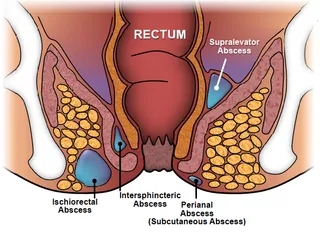
An anal fistula is an abnormal tunnel-like track that forms between the inside of your anal canal and the skin near your anus. In most cases, it starts as a small infection in one of the tiny glands inside the anal canal. That infection builds into an abscess (a pocket of pus), and when the abscess drains — either on its own or after a doctor drains it — the track it leaves behind sometimes refuses to heal. That persistent, open tunnel is the fistula. (A full overview of the procedures and costs is on our fistula treatment in Pune page — हिंदी में पढ़ें: भगंदर का इलाज पुणे।)
The key point here is that a fistula is a structural problem, not just an infection. There’s an actual physical passage lined with unhealthy tissue, kept open by the constant presence of bacteria from the anal canal. This is the reason most fistulas don’t simply “close up” with medication alone — just like a tunnel dug through a hillside doesn’t fill itself in.
What Does “Healing” Actually Mean for a Fistula?
Before judging any treatment — surgical or not — it helps to be precise about what “healed” means, because patients usually mean one of three different things. The skin looks calmer, with less redness and pain. The discharge stops for a while. Or the tract is genuinely gone — no internal opening, no tunnel, no recurrence risk. The first two happen regularly even while the tract is still there. True cure is the third one, and it’s a much higher bar. This is exactly why so many patients tell me their fistula “came back” after a quiet month — it never actually left.
The external opening on the skin can shrink when inflammation settles, which looks reassuring. But if the internal opening inside the anal canal remains, bacteria and stool-side pressure will re-open the pathway. I explain it to patients as a tap and a pipe: the internal opening is the tap, the tract is the pipe. Sealing the far end of the pipe while the tap keeps dripping rarely lasts. That is why proper treatment always starts with mapping the whole tract — not just looking at the outside — and why simple and complex fistulas need very different plans.
Why Do So Many People Search for Non-Surgical Fistula Treatment?
There are real, understandable reasons patients look for fistula treatment without surgery. Fear of pain during recovery is the biggest one — stories from older surgical techniques left a lasting impression. Concerns about damage to the anal sphincter muscles and the risk of incontinence come a close second. Some patients have already had one surgery and the fistula came back, which naturally makes them reluctant to try again. And then there are genuine financial concerns, especially when insurance coverage feels uncertain.
These fears are valid. But the question remains: can you actually treat a fistula without any procedure at all?
Non-Surgical Approaches — What’s Available and What the Evidence Says
Let’s go through each option patients commonly ask about. I’ll be straightforward about what each can and cannot do. (If you want to see how the surgical side compares — laser, VAAFT, LIFT — our fistula treatment in Pune page explains each procedure and its cost.)
1. Antibiotics
Antibiotics can help if you have an active infection around a fistula — redness, swelling, fever. They bring down the acute flare. However, antibiotics cannot close the fistula tract itself. Once the antibiotic course ends, the tract remains, and symptoms typically return. Think of it this way: antibiotics fight the bacteria, but they can’t demolish the tunnel.
2. Sitz Baths and Warm Soaks
Sitz baths (sitting in a few inches of warm water for 10–15 minutes) provide genuine relief from pain, itching, and irritation around the fistula opening. They help keep the area clean and reduce local swelling. I recommend sitz baths to almost all my fistula patients — but as a comfort measure, not a cure. A sitz bath will not make the internal tract heal or disappear.
3. Ayurvedic Kshar Sutra (Medicated Thread) Therapy
This deserves special mention because many patients in India ask about it. Kshar Sutra involves threading a medicated alkaline thread through the fistula tract. The thread is changed weekly and gradually cuts through and heals the tract over several weeks.
Here’s the nuanced truth: Kshar Sutra is technically a procedure — it requires identification of the tract and insertion of the thread, often under anaesthesia. It’s not “no surgery” in the way patients imagine. It can work for simple, low fistulas, but the treatment duration is long (often 6–12 weeks of weekly thread changes), it can be quite uncomfortable, and recurrence rates for complex fistulas are significant. It also doesn’t suit every fistula type, especially high or branching tracts.
4. Fibrin Glue
Fibrin glue is a biological adhesive that a surgeon injects into the fistula tract to seal it shut. It’s a genuinely minimally invasive option — no cutting, no wound, minimal pain. Sounds ideal, right?
The problem is effectiveness. Published studies show that fibrin glue has a success rate of only around 30–50% for simple fistulas, and even lower for complex ones. The tract often reopens within months. It can be worth trying in specific situations — a very simple, short tract in a patient who is a poor candidate for other procedures — but it’s not a reliable standalone cure for most fistulas.
5. Homeopathy and Herbal Remedies
I want to be respectful but honest. There is no high-quality clinical evidence that homeopathic medicines or herbal supplements can close an established anal fistula tract. Some patients report temporary symptom relief — reduced discharge or less pain — which may reflect natural fluctuations in the fistula’s activity. But the tract remains, and the risk of complications (abscess formation, worsening infection, tract extension) grows with delay.
6. Dietary and Lifestyle Changes
A high-fibre diet, adequate water intake, regular exercise, and avoiding prolonged sitting can absolutely help manage symptoms and reduce flare-ups. These changes improve bowel regularity, reduce straining, and lower the bacterial load around the fistula. I strongly recommend them to every patient. But like sitz baths, they’re supportive care — they make living with a fistula more comfortable, but they don’t eliminate the tract.
So, Can a Fistula Be Cured Without Surgery?
Let me give you the straightforward clinical answer: in the vast majority of cases, no. An established anal fistula with a well-formed tract requires a procedure to definitively close or remove the abnormal passage. The reason is structural — medication can fight infection and reduce inflammation, but it cannot physically eliminate a tunnel lined with granulation tissue that is constantly contaminated by intestinal bacteria.
There are rare exceptions. A very small, very superficial fistula that has formed recently — particularly one in a patient who is otherwise healthy and has no underlying conditions like Crohn’s disease — may occasionally close with conservative management (antibiotics, sitz baths, meticulous hygiene). But this is the exception, not the rule, and “wait and watch” carries its own risks if the fistula worsens.
The good news? Modern surgical treatment for fistula is nothing like what it used to be.
Modern Fistula Treatment — Minimally Invasive and Sphincter-Sparing
This is where the conversation should really land for most patients. The fear driving the search for fistula treatment without surgery is rooted in outdated ideas about what fistula surgery involves. Today’s options are dramatically different.
Laser Fistula Treatment (FiLaC)
Fistula-tract Laser Closure (FiLaC) is one of the most significant advances in proctology. A thin laser fibre is inserted into the fistula tract, and controlled laser energy destroys the unhealthy lining from the inside. The tract collapses and heals. There are no large cuts, the sphincter muscles are preserved, and recovery is remarkably fast.
At Sharvari Hospital, we perform laser fistula treatment as a day-care procedure. Most patients go home the same day. Pain after the procedure is mild — typically manageable with basic oral painkillers for 3–5 days. Return to desk work is usually possible within 2–4 days.
VAAFT (Video-Assisted Anal Fistula Treatment)
VAAFT uses a tiny camera (fistuloscope) to see inside the fistula tract directly. The surgeon can identify internal openings, side branches, and hidden pockets that might be missed in a blind procedure — and then treat the tract under direct vision. This approach is especially valuable for complex and recurrent fistulas.
LIFT Procedure (Ligation of Intersphincteric Fistula Tract)
The LIFT technique involves approaching the fistula tract through the space between the two sphincter muscles, tying it off, and removing the infected portion. It preserves the sphincter completely and has strong success rates for the right type of fistula (intersphincteric tracts). Recovery is quick, and the risk of incontinence is extremely low.
Advancement Flap
For complex, high fistulas, a surgeon can close the internal opening by creating a small flap of rectal tissue. This cuts off the source of contamination (the internal opening) and allows the tract to heal. It’s a more involved procedure but an excellent option when simpler methods aren’t suitable.
What Happens If You Keep Delaying Treatment?
This is something I feel strongly about, because I see it regularly in my clinic. Patients who delay definitive fistula treatment hoping for a non-surgical cure often end up in a worse situation than if they had acted earlier.
A simple fistula that could have been treated with a straightforward laser procedure can, over months or years of neglect, develop side branches, multiple external openings, or recurrent abscesses. What was once a 30-minute day-care procedure becomes a complex, staged surgery. The longer you wait, the more complicated — and more expensive — treatment becomes.
Chronic fistulas also carry a small but real risk of malignant change (cancer developing in the tract lining) if left untreated for many years. While this is rare, it’s a risk that doesn’t need to exist.
Myths That Lead to Dangerous Delays
After years of fistula consultations, I hear the same four beliefs again and again — and each one costs patients months.
“If I ignore it, it will seal on its own.” The external opening sometimes looks smaller, but the internal opening remains, and the risk of a fresh abscess persists the entire time you wait.
“Antibiotics fixed me last time.” They treated the acute infection around the tract. The tract itself stayed exactly where it was — which is why the symptoms returned.
“Laser isn’t real treatment anyway.” The opposite of the last myth, but just as harmful. Laser and other energy-based options are genuine medical procedures done in a proper facility with anaesthesia, consent, and follow-up — they are not gimmicks, and they are not “doing nothing.”
“This oil or cream from the internet can dissolve the tunnel.” Please be careful here. Caustic products applied to the delicate perianal skin can cause chemical burns, scar the area, and genuinely make later surgical planning harder. If a product promises to “melt” a fistula, that promise alone should warn you off.
When to See a Doctor — Don’t Ignore These Signs
You should consult a proctologist promptly if you notice any of the following:
Persistent or recurrent discharge (pus, blood, or foul-smelling fluid) near the anus. A small, painful lump near the anus that keeps coming back after draining. Pain or swelling around the anus that worsens over days. Fever along with anal pain — this may indicate an abscess that needs urgent drainage. A history of a previous anorectal abscess, even if it was drained and seemed to heal — about 30–50% of anorectal abscesses go on to form fistulas.
Early evaluation means simpler treatment, faster recovery, and better outcomes.
Why Choose Sharvari Hospital for Fistula Treatment in Pune?
At Sharvari Hospital in Wakad/Pimple Nilakh, Pune, we approach every fistula with a clear philosophy: use the least invasive technique that gives the most reliable result for your specific fistula type.
Here’s what sets us apart:
Expert evaluation first. Dr. Kundan Kharde (MBBS, MS — General Surgery, FMAS) personally examines every patient. With 19+ years of surgical experience, he has managed hundreds of fistulas — from straightforward simple tracts to complex, recurrent cases that other centres have struggled with.
Advanced diagnostic workup. We use MRI fistulography, 3D endoanal ultrasound, and examination under anaesthesia (EUA) to map the fistula completely before choosing a treatment plan. Accurate mapping is the single biggest factor in avoiding recurrence. See a real tract mapped on MRI and confirmed in theatre on our MRI fistula mapping page.
Full range of modern techniques. Laser FiLaC, VAAFT, LIFT, advancement flap, seton placement — we offer every evidence-based option and match the technique to your fistula’s anatomy, not a one-size-fits-all approach.
Day-care procedures when possible. Many of our fistula patients are treated and discharged on the same day, with minimal pain and a quick return to normal life.
Transparent pricing and insurance support. We work with 50+ insurance partners and provide clear cost breakdowns before any procedure. No surprise bills.
240+ Google reviews. Our patients consistently rate their experience highly — not just for surgical outcomes, but for the care, communication, and follow-up they receive.
Ready to get a clear answer about your fistula? Call us at +91 951 951 1928, email [email protected], or visit Sharvari Hospital, Pimple Nilakh, Pune — 411027.
Recovery and Lifestyle Tips After Fistula Treatment
Whether your fistula is treated with laser, LIFT, or another technique, these recovery tips help you heal faster:
Follow a high-fibre diet — fruits, vegetables, whole grains, and plenty of water (2.5–3 litres daily). This keeps stools soft and reduces pressure on the healing area. Take sitz baths 2–3 times a day for the first 1–2 weeks. Keep the area clean and dry — pat gently after washing, avoid rubbing. Take your prescribed medications on schedule, including stool softeners and any antibiotics. Avoid heavy lifting and strenuous exercise for 2–3 weeks. Attend all follow-up appointments — early detection of any recurrence is much easier to manage.
After modern minimally invasive fistula surgery at Sharvari Hospital, most patients return to their daily routine within a week.
What “Without Surgery” Can Actually Mean
True “no procedure” care means medicines, lifestyle, and watchful waiting only — reasonable for symptom control in some situations but rarely a permanent fix for a mature cryptoglandular fistula. Minimally invasive care still uses instruments (laser, scope, seton placement) but may avoid a classic wide fistulotomy. Patients often lump these together; doctors separate them for honest expectations.
If you think “no surgery” includes laser, you may be surprised that it is still an operation with anaesthesia and recovery. If you think antibiotics will “dissolve” a tract, you may delay drainage of an abscess. Clear language prevents harm.
Procedural “Bridges” — Minor Procedures That Are Not a One-Step Cure
These are real procedures — often minor — but they exist to control sepsis, protect muscle, or prepare for definitive repair.
- Incision and drainage of abscess: Urgent when pus collects. This is surgery, but it is not the same as full fistula eradication.
- Seton placement: A drain thread through the fistula. Common in complex or high disease and in some Crohn’s plans. It is procedural, but it may be part of a staged pathway rather than immediate “cut through all muscle.”
- Examination under anaesthesia (EUA): Mapping and planning procedure; may combine with drainage or seton.
- Office procedures some centres use for symptom control: always clarify the goal (comfort vs cure).
Bridges are strategic. Ask: What is step 2 if step 1 does not heal?
A Step-by-Step Decision Framework
- Is there an abscess right now? → Urgent drainage pathway; antibiotics alone are usually not enough.
- Is the fistula simple and low on exam? → May discuss definitive options earlier.
- Is it high, recurrent, or branching? → Expect imaging and possible seton staging; see our complex fistula approach.
- Do you have Crohn’s or ulcerative colitis with perianal disease? → Medical therapy coordination is central; surgery is timed carefully.
- What is your work and support at home? → Bridges vs definitive timing may depend on leave and travel.
If you want clarity at your consultation without any jargon, two questions usually surface a sensible plan: “If we do nothing for three months, what is the realistic chance this tract stays quiet — and what is the risk of another abscess?” and “If we plan treatment, what is the least invasive option that still matches my exam or MRI findings?”
Special Situations: Pregnancy, Diabetes, Crohn’s Disease and IBD
Perianal Crohn’s may need biologics and multidisciplinary care. Surgery is selective and often staged. Do not compare your plan to a friend’s simple fistula pathway.
Gastroenterology input changes timing, seton strategy, and expectations. Bring a summary of your IBD medicines to every surgical visit.
Pregnancy deserves its own mention: anal symptoms during pregnancy should never be dismissed as “only pregnancy piles.” If a fistula or abscess is suspected, the obstetric and surgical teams coordinate the timing of evaluation and any procedure so both mother and baby stay safe.
Diabetes raises the stakes in a different way — perianal infections can progress faster and heal slower when blood sugar is poorly controlled. For diabetic patients I favour proactive drainage of any collection, tighter follow-up, and early definitive planning rather than prolonged watchful waiting.
Case Examples (Composite, Educational Only)
Example A: A young adult has a small perianal abscess with fever. The urgent need is drainage and antibiotics as prescribed — not a debate about laser versus open surgery while infection is uncontrolled. Example B: A person has a mature fistula with occasional drainage but no acute infection. They may trial symptom care and plan elective mapping, understanding that lasting closure usually needs a procedural pathway. Example C: A patient with Crohn’s has multiple openings. Management may emphasise medical therapy and setons before any “definitive” step. These stories are teaching sketches, not your personal medical advice.
Planning a Conservative Trial: Set a Review Date
If your team offers a short conservative window (antibiotics plus hygiene) for a very selected situation, clarify the end date for reassessment. Open-ended “let us wait months” plans without mapping can postpone needed drainage. Write the review date on your calendar. If symptoms worsen before that date, move the visit earlier.
Emergency Signs That Skip Every Framework
No treatment framework replaces urgent care when you have high fever, rigors, rapidly spreading skin redness, inability to sit from pain, or confusion. Those symptoms suggest serious infection until proven otherwise. Call emergency services or go to the nearest emergency department. After sepsis is ruled out, you can return to structured planning with your proctology team.
Talking It Through With Family
Families sometimes push home remedies or fear surgery. A calm approach is to share the categories above: “Doctor says we need drainage first,” or “This is a staged plan with a seton.” Agree on one trusted clinician rather than five conflicting WhatsApp forwards.
Work Leave and Insurance Paperwork
Even if you are on a conservative plan first, you may need medical certificates for leave. Ask your doctor for honest wording about activity limits. For insurance pre-auth if surgery is planned later, start document collection early — see our insurance guide.
Frequently Asked Questions
Can fistula be cured without surgery?
In rare cases, a very small and superficial fistula may close with conservative management — antibiotics, sitz baths, and careful hygiene. However, the vast majority of established anal fistulas require a procedure to close the tract permanently. Modern options like laser treatment are minimally invasive and far less painful than traditional surgery.
What is the best non-surgical treatment for fistula?
Fibrin glue and Kshar Sutra (medicated thread) are sometimes used as less invasive alternatives, but their success rates are limited — especially for complex fistulas. Fibrin glue works in roughly 30–50% of simple cases. Sitz baths, antibiotics, and dietary changes help manage symptoms but don’t close the tract. The most effective “least invasive” option today is laser fistula treatment (FiLaC), which is a procedure but involves no cuts and minimal pain.
Is laser fistula surgery painful?
Laser fistula treatment is performed under anaesthesia, so you feel nothing during the procedure. Post-procedure discomfort is mild — most patients describe it as a dull ache for 2–3 days, easily managed with oral painkillers. It’s dramatically less painful than traditional fistulotomy or fistulectomy.
How long does it take to recover from laser fistula treatment?
Most patients return to desk work within 2–4 days. Light physical activity can resume in about a week. Complete internal healing takes 4–6 weeks, during which you’ll follow dietary guidelines and attend follow-up visits. Day-care discharge (same-day) is standard for suitable cases at Sharvari Hospital.
Can a fistula come back after treatment?
Recurrence is possible with any technique, but the risk is significantly lower when the fistula is accurately mapped before surgery and the right technique is chosen for the specific tract anatomy. At Sharvari Hospital, we use MRI fistulography and examination under anaesthesia to map every fistula before deciding on a treatment plan — this thorough approach is key to minimising recurrence.
Is a seton considered surgery?
Yes — it is a procedure to place a drain thread through the fistula, often part of staged fistula care in complex or high tracts. It controls infection and protects the sphincter muscle while the definitive plan is prepared.
Does delaying fistula treatment make it worse?
Yes. A simple fistula left untreated can develop side branches, additional external openings, and recurrent abscesses over time. What could have been a straightforward day-care laser procedure may become a complex, multi-stage surgery. Early evaluation and treatment almost always lead to better outcomes.
Does kshar sutra work?
Kshar Sutra can work for simple, low fistulas, but it is itself a procedure — a medicated thread is passed through the tract, often under anaesthesia, and changed weekly for 6–12 weeks while it gradually cuts through the tract. Treatment is prolonged and can be uncomfortable, and recurrence rates for complex or high fistulas are significant. It is not “treatment without surgery” in the way most patients imagine.
What happens if fistula is left untreated?
The tract does not disappear — it tends to flare repeatedly, form new abscesses, and develop side branches and extra openings that make eventual surgery more complex. Chronic, long-neglected fistulas also carry a small but real risk of malignant change in the tract lining. Untreated fistulas rarely stay quiet forever, which is why early mapping and a definitive plan are safer than open-ended waiting.
When Fistula Surgery IS Necessary
Everything above is honest about what conservative care can do. It is equally important to be honest about the point at which surgery stops being optional:
- A tract that has already formed does not close on its own. Once the tunnel is established and lined with granulation tissue, no medicine dissolves it.
- Medication and dressings control infection — they do not close the tract. They are a bridge, not a destination.
- Repeated abscesses, ongoing discharge, or a tract visible on MRI all mean the fistula is established and definitive surgery is the treatment.
- Delaying allows secondary tracts to form. Each new branch makes later surgery technically harder and raises the risk to bowel control — the very complication patients are trying to avoid by waiting.
If any of these apply to you, the kindest thing you can do for your future self is to get the tract mapped and definitively treated now, while it is still simple.
Ready to have your fistula properly assessed?
Sharvari Hospital, Pimple Nilakh, offers laser (FiLaC), VAAFT, LIFT and staged seton pathways — matched to your fistula’s anatomy, not a one-size-fits-all approach. 19+ years, 6,000+ surgeries, cashless with 50+ insurers, open 24x7.
👉 Fistula treatment in Pune · Complex & recurrent fistula treatment
📞 Call or WhatsApp: +91 951 951 1928
The Bottom Line
I understand the hope behind searching for fistula treatment without surgery. Pain, recovery time, cost, fear of incontinence — these are real concerns, and you deserve honest answers about them.
The truth is that most established anal fistulas need a procedure. But the procedure you need in 2026 is nothing like the surgery your parents’ generation feared. Laser fistula treatment, VAAFT, and LIFT are minimally invasive, sphincter-sparing, and designed for fast recovery. Many of my patients at Sharvari Hospital are genuinely surprised by how smooth the experience is — and wish they hadn’t spent months or years trying alternatives that couldn’t work.
If you have a fistula, the smartest first step isn’t choosing a treatment online — it’s getting an expert evaluation. Let an experienced fistula treatment in Pune examine you, map your fistula accurately, and explain which options genuinely apply to your situation. That one consultation can save you months of uncertainty.
Book your consultation today: Call +91 951 951 1928 or visit Sharvari Hospital, Pimple Nilakh, Pune — 411027. You can also reach us on WhatsApp at the same number.
Sources
- Cleveland Clinic — Anal fistula: https://my.clevelandclinic.org/health/diseases/14466-anal-fistula
- Mayo Clinic — Anal fistula: https://www.mayoclinic.org/diseases-conditions/anal-fistula/symptoms-causes/syc-20351345
- American Society of Colon and Rectal Surgeons — Anal abscess and fistula: https://fascrs.org/Web/Web/Patients/Diseases-and-Conditions/A-Z/Abscess-and-Fistula-Expanded-Information.aspx
- NHS — Anal fistula: https://www.nhs.uk/conditions/anal-fistula/
Dr. Kundan Kharde is a senior general and laparoscopic surgeon at Sharvari Hospital, Pune, with over 19 years of experience in proctology, hernia, and minimally invasive surgery. He is a Fellow of the Minimal Access Surgery (FMAS) and has helped hundreds of patients with anal fistulas return to comfortable, normal lives.