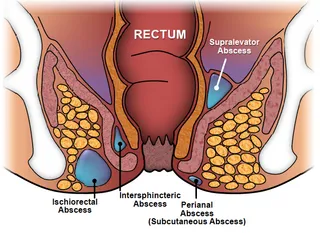
If you notice ongoing drainage, tenderness, or repeat swelling near the anus, you may be reading about anal fistula for the first time—or you may have been told the word at a clinic and want it explained clearly. This article is a patient-focused overview: what a fistula is, how it usually starts, what it feels like, and when to seek care without delay. It does not replace an examination.
For how fistulas are treated in Pune (options, techniques, and next steps), see the complete fistula treatment guide. To book a consultation at Sharvari Hospital, use online booking. For the wider specialty context, visit Proctology.
Medically reviewed by Dr. Kundan Kharde, MS, FMAS — Senior Proctologist at Sharvari Hospital, Pune. View profile.
Anal fistula in simple terms
An anal fistula (fistula-in-ano) is an abnormal tunnel that connects the inside of the anal canal (or nearby rectal area) to the skin outside, usually near the anus. It is not the same as a simple skin infection that clears with cream. The tunnel often has an internal opening (where fluid and bacteria enter from the bowel side) and an external opening on the skin (where drainage exits). Until that pathway is properly evaluated and treated, many people have cycles of irritation, discharge, and repeat abscess-type swelling.
Authoritative patient resources from the American Society of Colon and Rectal Surgeons (ASCRS) describe fistula-in-ano as a communication between the anal canal and the perianal skin, commonly following an anorectal abscess. The Cleveland Clinic similarly explains that fistulas often form after an anal abscess that did not heal completely. You can use those pages as independent, non-commercial references while you wait for an appointment.
How a fistula differs from a pimple or skin boil
A boil on the buttock or a small pimple is usually a local skin or hair-follicle problem. It may hurt and drain, but it does not typically create a lasting tunnel that connects to the anal canal.
A fistula, by contrast, is defined by that persistent tract. You might see an opening that never quite settles, or swelling that returns in the same area after antibiotics. That repeating pattern is a clue that you need a proctology-type assessment—not repeated self-treatment alone.
The usual story: abscess first, fistula later
Most anal fistulas in otherwise healthy adults are cryptoglandular—they relate to infection starting in tiny glands near the anal canal. Often the story begins with a perianal abscess (a painful, swollen, sometimes feverish pocket of infection). The abscess may drain with medical help or on its own. Afterward, some people heal fully. Others are left with a tract that keeps acting up.
Educational materials from specialist societies note that a substantial share of people who have an anorectal abscess may go on to develop a fistula; exact percentages vary by how patients were studied, which is why your surgeon will focus on your symptoms and exam rather than a single number. If you have had an abscess before, it is sensible to mention that history at your visit even if the skin looks calm on the day of the appointment.
Common causes and risk factors
Why infection tracks outward
The short version: pressure, bacteria, and inflammation near the anal canal can create a path of least resistance toward the skin. Over time the body may wall off that path, but the connection can remain. That is why the problem often feels “almost better,” then returns.
Conditions that can raise risk (for example Crohn’s disease)
In otherwise healthy people, cryptoglandular infection is the usual mechanism. In people with Crohn’s disease or other inflammatory bowel conditions, fistulas can behave differently—sometimes more complex, with multiple tracts or slower healing. Diabetes, smoking, and immunosuppression can affect how infections behave and how tissues heal. You do not need to self-classify; tell your doctor your full medical history so planning stays safe.
Symptoms that suggest a fistula
Symptoms vary, but common patterns include:
- Drainage near the anus—clear, yellow, or bloody fluid that stains underwear or needs padding
- Itching or irritation from moisture and repeated skin contact
- A tender lump or swelling that improves, then comes back in a similar location
- Discomfort with sitting or wiping; some people feel pain with bowel movements if there is spasm or secondary fissure
- A small visible opening or pit on the skin that persists for weeks
When to treat symptoms as urgent: fever, spreading redness, rapidly worsening pain, difficulty passing urine, confusion, or if you are immunocompromised. These can signal a deeper infection or abscess that needs prompt care—not a “wait until next week” plan.
Everyday language: “phoda,” tags, and repeat boils
In clinic, many patients describe a repeat “phoda” (boil) in the same spot, a small tag of skin that leaks, or a hole that never quite closes after an abscess was drained. Those stories matter. They help your doctor separate a one-time skin infection from a fistula pattern. Bring notes: when swelling started, whether you had fever, if antibiotics helped only briefly, and whether discharge is worse after constipation or long sitting.
What not to do while you wait for an appointment
Avoid inserting anything into the opening, aggressive home probing, or strong caustic “home remedies” that can burn skin and distort the exam. If you were started on antibiotics elsewhere, finish them only as prescribed, but still attend follow-up—antibiotics can calm infection without removing the tract. For comfort, lukewarm sitz baths and gentle hygiene are reasonable while you arrange specialist review.
When to see a doctor (and how soon)
If you have persistent perianal drainage for more than a week or two, or repeat swellings in the same area, book an evaluation. Early assessment can reduce the chance that a straightforward tract becomes a complex fistula with branches or scarring from multiple flares.
You do not need an emergency visit for mild, stable symptoms—but you do need timely clinic review. If you are unsure, many hospitals offer same-week appointments; at Sharvari Hospital you can book online or call +91 951 951 1928.
Red flags: fever, spreading redness, severe pain
Go urgently if you develop high fever, redness that spreads, severe pain that is worsening, or you feel systemically unwell. Abscess drainage may be required before any definitive fistula repair is planned.
Why early care can prevent a complex tract
Repeated untreated infections can encourage side branches and scarred tissue. Complex fistulas are still treatable, but they more often need imaging, staged procedures, and longer follow-up. Early mapping and a clear plan usually mean a simpler journey.
How doctors evaluate you (brief overview)
Examination and why details matter
Your surgeon will usually ask about symptoms, prior abscess drainage, bowel habits, and medical conditions. The exam may include a careful look at the outside, gentle digital examination, and sometimes anoscopy to locate the internal opening. The goal is to understand where the tract runs relative to the muscles that control continence.
When imaging is ordered (preview only)
Almost every fistula patient at Sharvari Hospital is imaged before surgery — an MRI fistulogram or a trans-rectal ultrasound. The scan maps whether the tract is high, branched, or recurrent and how much sphincter it crosses — information the exam alone cannot give, and the reason it is done before the technique is chosen. For a deeper read on tests, see our guide on how anal fistula is diagnosed.
Treatment snapshot (without replacing your consult)
Most established fistulas need a planned procedure because the physical tunnel remains. Conservative care (antibiotics, sitz baths, fibre, hygiene) can calm symptoms or help between stages, but it rarely replaces definitive treatment for a mature tract.
This article stays intent-specific so it does not duplicate the full surgery chapter: for techniques, candidacy, and Pune-specific pathways, use the fistula treatment hub. If your main worry is time off work, add the desk-focused recovery article quick recovery after fistula surgery—it complements, rather than repeats, the main guide.
Where to read next on Sharvari Hospital’s site
- Fistula treatment in Pune — main guide
- Book a consultation
- Proctology services
- Nearby areas: fistula treatment near Wakad, fistula treatment near Hinjewadi
Common questions (FAQ)
What is an anal fistula in simple words?
It is an abnormal tunnel between the anal canal and the skin near the anus, often after a perianal abscess. Only an examination and imaging can confirm it and map it.
What are the first symptoms of a fistula?
Many people notice persistent discharge, a tender lump that comes and goes, itching, or a small opening that does not fully heal.
Does an anal fistula heal on its own?
Lasting closure without treatment is uncommon for an established tract because the internal opening and bacteria keep the pathway active. Some people have quiet periods, but symptoms often return.
Is an anal fistula serious?
It can cause repeated infections and reduced quality of life. Urgent symptoms such as fever or spreading redness need prompt care. Long delays can make surgery more complex.
Which doctor treats anal fistula?
A colorectal surgeon or proctologist evaluates and treats fistulas. In Pune, you can start with a structured consultation at Sharvari Hospital—book online.
Sources for general education (not a substitute for medical advice): ASCRS patient information — anorectal abscess and fistula; Cleveland Clinic — anal fistulas; StatPearls — anal fistula (NCBI Bookshelf).