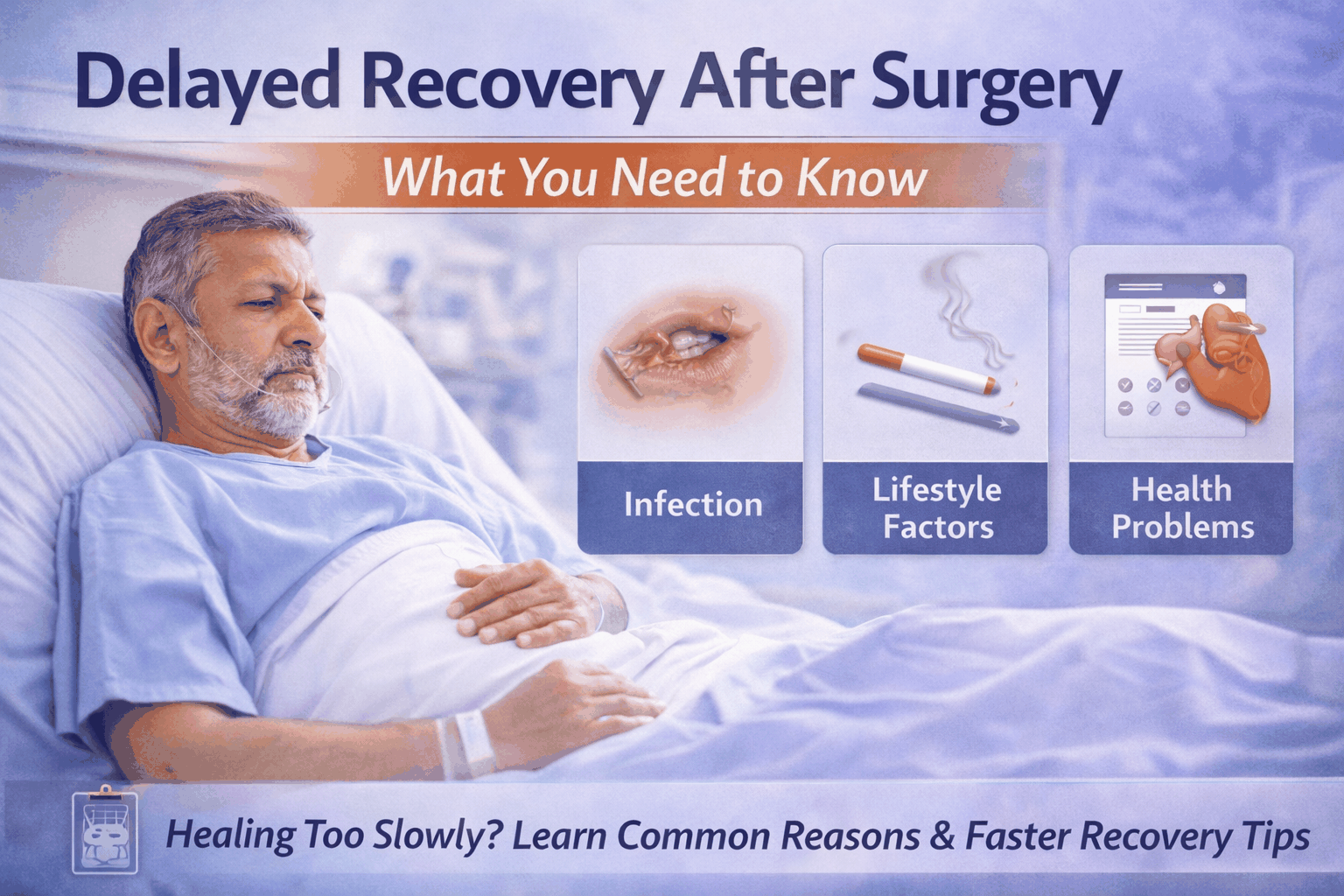
Delayed recovery after surgery is common and usually manageable.
If healing is slower than expected, it does not always mean the surgery failed. Recovery speed depends on multiple medical and lifestyle factors.
What delayed recovery means
Delayed recovery is when pain, weakness, swelling, or wound healing continues beyond the expected timeline.
You may feel progress has stopped, or symptoms may improve very slowly.
Medical reasons for slow healing
Several conditions can delay tissue repair:
- Infection at or around the surgical site
- Poor blood circulation
- Uncontrolled diabetes
- Anemia or protein deficiency
- Heart, lung, or kidney disease
These factors reduce oxygen delivery and immune response, both essential for healing.
Lifestyle factors that affect recovery
Daily habits have a direct impact on outcomes.
Common issues include:
- Smoking or tobacco use
- Poor sleep quality
- Inadequate hydration
- Low-protein diet
- Complete bed rest without guided movement
Small corrections in routine can create major recovery gains.
Aftercare mistakes to avoid
Some delays are caused by non-adherence to post-op instructions.
Avoid these mistakes:
- Skipping follow-up visits
- Stopping medicines early
- Returning to work too soon
- Ignoring wound-care instructions
Good aftercare is as important as the operation itself.
Warning signs that need urgent review
Do not wait if you notice:
- Fever or chills
- Increasing pain instead of gradual relief
- Redness, discharge, or foul smell from wound
- New swelling, breathlessness, or severe weakness
Early medical review can prevent serious complications.
How to heal faster after surgery
Use this practical recovery checklist:
- Follow your surgeon’s plan exactly
- Eat a balanced, protein-rich diet
- Stay hydrated throughout the day
- Start gentle mobility as advised
- Sleep adequately and reduce stress
Consistency matters more than intensity.
When to consult a specialist
If recovery plateaus or worsens, ask for reassessment.
At Sharvari Hospital, delayed recovery after surgery is evaluated through a structured approach to identify reversible causes and restart progress safely.
Some wounds need more than patience. A wound near the tailbone that has never closed since surgery, for example, is usually a disease problem rather than a healing problem — see recurrent pilonidal sinus after failed surgery for how a persistent wound is told apart from a true recurrence.
Final takeaway
Delayed recovery after surgery is often treatable with early action.
With timely evaluation, better habits, and guided follow-up, most patients can regain momentum and return to normal life confidently.