Patients often use the words fistula and fissure interchangeably, but they describe different problems with different exams and different treatment paths. This article compares them in plain language so you know what patterns to report at a consultation—and why self-diagnosis from photos or forums is unreliable.
If you need treatment planning in Pune, start with the fistula treatment guide for fistula-specific care, the fissure treatment service page for fissure-focused care, and book online at Sharvari Hospital. The Proctology hub links broader anorectal services.
Medically reviewed by Dr. Kundan Kharde, MS, FMAS — Senior Proctologist at Sharvari Hospital, Pune. View profile.
Quick summary: fistula vs fissure
- An anal fissure is a tear or ulcer in the lining of the anal canal—like a small cut that hurts sharply, often with bowel movements.
- An anal fistula is a tunnel that connects the anal canal (or nearby) to the skin, often with ongoing or recurring drainage and a history of abscess.
The Cleveland Clinic describes fistulas as tunnel-like tracts; its patient materials on anal fissure describe a tear in the anal lining. Both pages are useful independent reading.
Pain during bowel movements vs intermittent drainage
Fissure pain is classically intense during or immediately after passing stool—like passing glass—then may throb for minutes to hours. Fistula pain may be milder day to day, with more emphasis on wetness, discharge, itching, or recurrent lump when infection flares.
Where each problem “lives”
A fissure is on the inner lining—you cannot see it yourself unless it is very low and your doctor examines you. A fistula often has a visible external opening on the skin or a palpable cord-like area—though not always.
Anal fissure: what it is and how it feels
An anal fissure is usually a linear split in the delicate skin/mucosa of the anal canal. Common triggers include hard stools, straining, diarrhoea spells, childbirth trauma, or prolonged spasm after a painful bowel movement.
Typical symptoms and triggers
- Sharp pain with bowel movements
- Bright red blood on paper or on the surface of stool
- Fear of passing stool because of pain (leading to constipation, which worsens the tear)
- Itching or irritation
When fissures become chronic
Doctors often call a fissure chronic when symptoms last roughly two months or more and the edges feel fibrous—your clinician will classify this. Chronic fissures may need prescription creams, botulinum toxin, or sometimes a small outpatient procedure if conservative care fails. Timelines vary by guideline; the key message is: persistent pain needs review, not months of silent suffering.
Anal fistula: what it is and how it feels
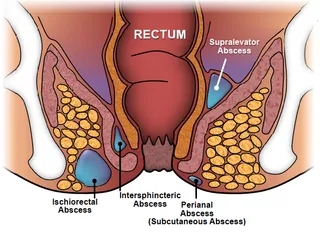
A fistula is defined by a tract—not just a cut. Many fistulas follow a perianal abscess that drained but left a pathway behind.
Typical symptoms and the abscess connection
- Persistent or intermittent pus-like or serous drainage
- A pit or opening on the skin that never fully closes
- Recurrent swelling in the same region
- Sometimes fever when infection flares
External opening and drainage patterns
Some patients use pads or tissue through the day. If discharge has a foul smell or you have fever, treat that as a prompt medical issue.
Different causes, different pathways
Fissure risk factors
Constipation, low-fibre intake, dehydration, frequent diarrhoea, and conditions that alter bowel habit can contribute. The problem is often mechanical—stool passing over a sensitive area.
Fistula risk factors
Cryptoglandular infection is common in healthy adults. Crohn’s disease and other conditions can change how fistulas behave. Prior abscess drainage surgery is an important part of the story.
Side-by-side snapshot (patterns, not a diagnosis)
| Topic | Anal fissure (typical) | Anal fistula (typical) |
|---|---|---|
| Main complaint | Sharp pain with stool | Discharge, dampness, repeat lump |
| Bleeding | Often bright, small, on paper | Can occur; not the only clue |
| Visible skin opening | Usually none | Sometimes a small pit or hole |
| Prior abscess | Not required | Common in the history |
| Urgent risk | Severe pain; rule out other causes | Fever, spreading redness with abscess |
Tables simplify reality—your surgeon still examines you. If you work long hours near Hinjewadi or Wakad, do not ignore symptoms just because they “come and go” between busy sprints; intermittent drainage is compatible with fistula, while cyclical tearing pain is compatible with fissure.
Treatment paths are not the same
What often helps a fissure first
Soft stools, fibre, fluids, sitz baths, and doctor-prescribed ointments are common first steps. The goal is to break the pain–spasm cycle so the tear can heal.
Why fistulas usually need procedural planning
Once a mature tract exists, creams and antibiotics rarely remove the tunnel. Treatment is matched to how the tract relates to the sphincter muscles. For an overview of options (without turning this page into a duplicate of the main guide), see fistula treatment in Pune.
Still unsure? How doctors tell the difference
Examination findings patients cannot see at home
A specialist may perform a gentle digital exam, look with an anoscope, or palpate for a tract. If the story suggests fistula, expect imaging before definitive surgery — Almost every fistula patient at Sharvari Hospital is imaged before surgery — an MRI fistulogram or a trans-rectal ultrasound.
Why self-diagnosis can delay the right care
Bleeding can occur in both conditions. Pain patterns overlap. Only an exam sorts them reliably—and sometimes both issues coexist if a patient has been straining through fistula discomfort.
Children and teenagers
Fissures can occur in younger patients with constipation. Fistulas still occur but the differential is broader—evaluation should be clinician-led. If you are reading this for your child, seek paediatric-suitable guidance rather than adult forums.
When symptoms should prompt faster assessment
Seek urgent care for high fever, rapidly worsening anal pain, inability to sit, spreading redness, or confusion—these can indicate abscess or deeper infection. For stable but persistent symptoms, book a routine proctology slot soon rather than waiting months.
Life impact: work, travel, and dignity
Both conditions can affect concentration at work, long commutes, and exercise. Fissure pain may make you dread the office toilet; fistula discharge may make you carry spare clothes or worry about odour. These are valid concerns to mention to your doctor—management plans can account for your schedule. If you need a realistic timeline for desk jobs after fistula procedures, read fistula surgery recovery for desk work after you know your planned technique.
Questions to bring to your Sharvari consultation
- When did symptoms start, and what makes them better or worse?
- Have you ever had a perianal abscess drained?
- Do you see blood on the surface of stool, mixed in, or on the wipe only?
- Any fever, weight loss, or diarrhoea that suggests bowel inflammation?
- Medicines you take (especially blood thinners or immunosuppression)?
Writing answers on your phone before the visit reduces forgotten details.
Follow-up and honesty about recurrence
If you have been treated before and symptoms returned, say so upfront. Recurrent symptoms after fissure treatment may mean ongoing constipation or spasm; recurrent symptoms after fistula surgery may mean a missed branch, altered anatomy, or new abscess. Neither scenario is a reason for shame—it is clinical information that helps your team choose imaging and the right stage of care.
Related reading (intent-specific links)
- What is an anal fistula?
- Piles vs fissure vs fistula
- Fistula treatment — main hub
- Book a consultation
Common questions (FAQ)
How do I know if I have a fissure or fistula?
Fissures often cause sharp pain with bowel movements; fistulas more often cause drainage or repeat swelling in the same area. An examination is required to be sure.
Can a fissure turn into a fistula?
They are different conditions. Severe or atypical symptoms should be evaluated rather than assumed to be “just a fissure.”
Does a fistula bleed like a fissure?
Either can bleed, but persistent external drainage is more suggestive of fistula. Do not rely on bleeding alone to decide.
Which is more serious: fistula or fissure?
Both deserve care. Fistulas often need a procedural plan; chronic fissures also need structured treatment so pain does not become long-term.
Do creams cure a fistula?
Topical creams may soothe skin but they do not remove the tract. Ask a proctologist about definitive options—overview here.
Educational sources: Mayo Clinic — anal fissure; Mayo Clinic — anal fistula; Cleveland Clinic — anal fistulas.