You train three times a week. The groin pain starts after a sprint, a kick or a long run, settles with rest, and then returns the next time you play. Your scan shows “nothing”, the X-ray is normal, and there is no lump to point to. Sound familiar?
This is the classic story of a sportsman hernia, and also of several other groin problems that look just like it. In this guide, Dr. Kundan Kharde explains how we separate them, what treatment works, and when surgery is truly the right answer.
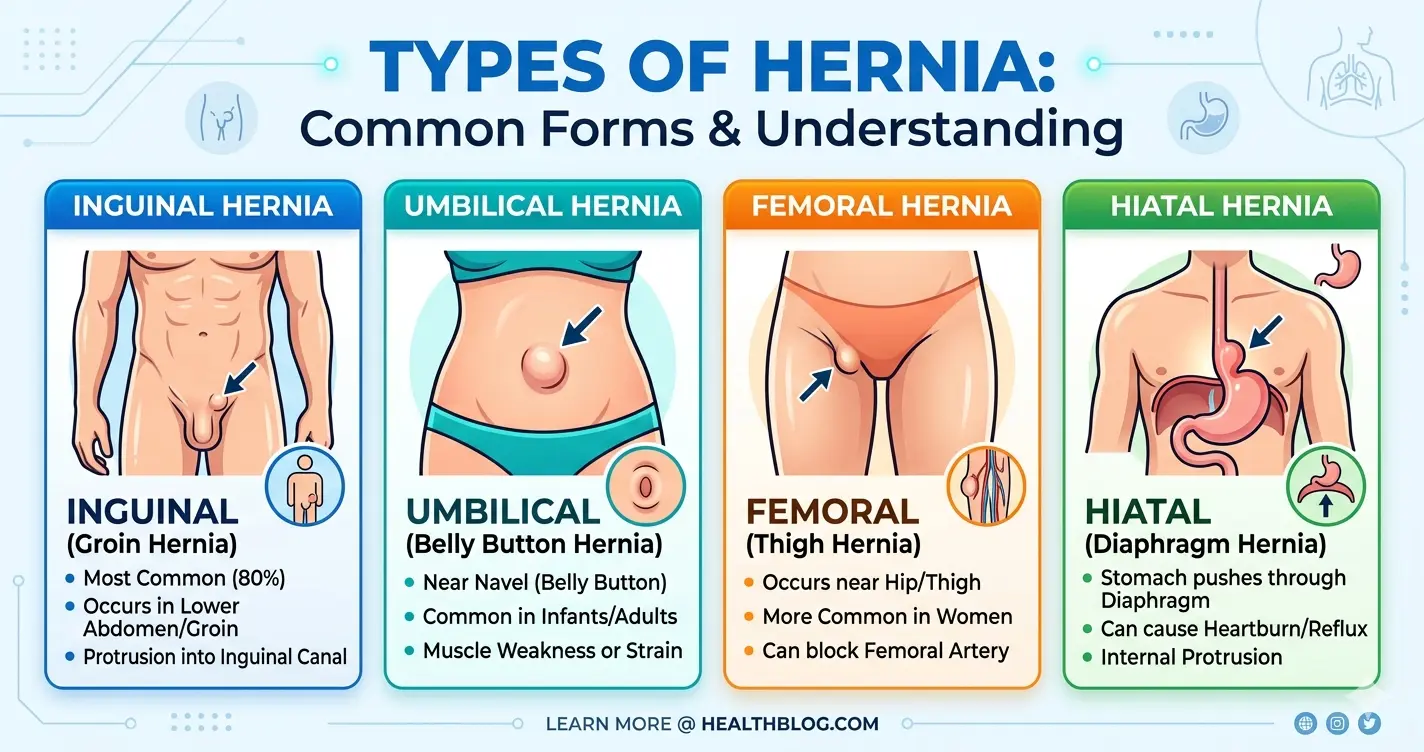
If you have a visible bulge in the groin, you may have a true hernia instead. See our hernia surgery page, or recurrent hernia repair if you have been operated before.
What is a sportsman hernia?
A sportsman hernia, also called athletic pubalgia or inguinal disruption, is a strain or weakness of the soft tissues at the back of the groin near the pubic bone. There is usually no bulge. It causes deep groin pain with sprinting, twisting, kicking or sit-ups, and eases with rest.
The name is misleading. It is not a hernia in the usual sense, because nothing is pushing through a gap. Instead, the muscles and tendons that attach to the pubic bone (the lower abdominal muscles and the adductors) are overloaded, and the back wall of the inguinal canal can become weak or torn.
It is most often seen in footballers, cricketers (fast bowlers and fielders), hockey and badminton players, runners, and gym-goers who do heavy core and leg work. Many of our patients in Wakad, Hinjawadi and Baner are weekend cricketers and runners who push hard after long desk-bound weeks, which is a common set-up for this injury.
How is a sportsman hernia different from a normal inguinal hernia?
A true inguinal hernia is a gap through which fat or bowel bulges out, so there is usually a visible or palpable lump, especially on coughing. A sportsman hernia has no such protrusion. The problem lies in strained muscle and tendon attachments, so diagnosis relies on examination and imaging.
| Feature | Sportsman hernia | True inguinal hernia |
|---|---|---|
| Visible bulge | Usually none | Usually present, worse standing or coughing |
| Typical pain | Deep, sharp, on sprinting, twisting, sit-ups | Dragging ache or pressure, worse on lifting |
| Pain after sport | Often worse next morning | Variable |
| Cause | Overload of groin muscles and tendons | Gap in abdominal wall |
| Treatment | Rehab first; surgery in selected cases | Surgery (mesh repair) once symptomatic |
| Emergency risk | None | Rare but real (strangulation) |
An athlete can have both at the same time. That is one reason a careful examination matters. A true hernia that is “hidden” in a muscular person is sometimes picked up only on ultrasound.
What else can cause groin pain in athletes?
Adductor tendinopathy, osteitis pubis, hip impingement (FAI), hip labral tears, nerve entrapment, lumbar spine referral and urological causes can all mimic a sportsman hernia. Many athletes have more than one cause, which is why a single “scan shows nothing” report can be misleading.
| Condition | Where it hurts | Clue |
|---|---|---|
| Adductor tendinopathy | Inner thigh, close to the pubic bone | Pain squeezing the knees together |
| Osteitis pubis | Over the pubic bone, centre | Tender pubic joint, pain on walking |
| Femoroacetabular impingement (FAI) | Deep groin, hip | Pain on deep hip flexion, clicking |
| Hip labral tear | Groin, front of hip | Catching, locking |
| Ilioinguinal or genitofemoral nerve irritation | Groin, upper thigh, scrotum | Burning, tingling |
| Sportsman hernia | Lower groin, may spread to scrotum or inner thigh | Pain with sprint, kick, sit-up, cough |
| Urological or spinal causes | Variable | Urine symptoms, back pain |
Getting the right label first saves months of the wrong treatment. We have seen athletes operated on for “sports hernia” when the real problem was the hip, and the pain did not go.
How is sportsman hernia diagnosed?
There is no single test. Diagnosis combines a careful examination, an ultrasound to rule out a true hernia, and often an MRI of the pelvis with a pubic symphysis protocol. Hip imaging is added when a hip cause is suspected. The final call is clinical, not just a scan result.
At your first visit we will usually:
- Ask when and how the pain began, which movements trigger it, and what you have already tried.
- Examine the groin standing and lying down, with and without a cough, and check the adductors, hip movement and pubic bone.
- Arrange a dynamic ultrasound to exclude a true inguinal hernia.
- Advise an MRI (pelvis and pubic symphysis) when pain has persisted beyond a few weeks. It shows tendon injury, bone marrow oedema and alternative diagnoses.
- Add a hip X-ray or MRI if the examination points to FAI or a labral tear.
Please bring your earlier scans and physiotherapy notes. They help us avoid repeating tests.
Does sportsman hernia need surgery, or can rehab fix it?
Many athletes improve with about three months of structured physiotherapy: core, hip and adductor strengthening plus load management. Surgery is considered when a well-supervised rehab programme has failed and the diagnosis is confirmed. Operating without trying rehab first is usually not advised.
This is where we are deliberately honest: surgery is not the first answer for most athletes, and it is not a guaranteed fix. Outcomes are best when the diagnosis is clear and rehab has genuinely been tried and has failed.
| Option | Who it suits | Honest trade-off |
|---|---|---|
| Rest, load management and physiotherapy (8–12 weeks) | First step for almost everyone | Needs discipline; success depends on the programme |
| Anti-inflammatory medicines, short course | Flares, with rehab | Treats pain, not the cause |
| Image-guided injection | Selected cases, e.g. pubic bone or tendon pain | Temporary relief; not a cure |
| Laparoscopic mesh repair (TEP or TAPP) | Confirmed weak groin floor, failed rehab | Small cuts and quick recovery; mesh in the body; not for hip or adductor causes |
| Open tissue repair (no mesh, Shouldice-type) | Athletes who prefer no mesh, surgeon’s choice | Longer rehab; more dependent on technique |
| Nerve release or division | When nerve pain is prominent | Can leave a numb patch |
| Adductor tendon procedure | When adductor disease is the main source | Often combined with other steps |
What surgery is done for sportsman hernia, and is laparoscopy better?
Laparoscopic repair (TEP or TAPP) places a flat mesh behind the groin muscles to reinforce the weak back wall, through three small cuts. Open tissue repair tightens the groin floor without mesh. Neither is “best” for all; the choice depends on your findings, your sport and your surgeon’s experience.
In practice, we favour laparoscopic TEP when the problem is clearly a weak posterior inguinal wall, because recovery is quicker, both groins can be checked in one sitting, and a hidden true hernia is picked up and treated at the same time. If nerve irritation or adductor disease dominates, those may need to be addressed too.
What we will not do is promise a specific “return to the pitch” date or a cure rate before we have examined you. Published results vary widely between centres, and a large share of the difference comes from choosing the right patients.
How long is recovery and when can I return to sport?
After laparoscopic repair, most athletes walk the same or next day, return to desk work in about a week and start graded rehab within two weeks. A full return to competitive sport is commonly four to twelve weeks, depending on sport, procedure and how the groin responds.
| Stage | Typical timing | What you do |
|---|---|---|
| Day 0–2 | Home on the same or next day | Walk, light movement |
| Week 1–2 | Desk work resumes | Gentle stretching, no lifting |
| Week 2–4 | Physiotherapy begins | Core, hip and adductor activation |
| Week 4–8 | Running progression | Jog, then straight-line sprints |
| Week 8–12 | Sport-specific drills | Cutting, kicking, bowling in stages |
| After 12 weeks | Full competition | Only after strength and pain tests are passed |
Recovery is faster when the rehab plan is agreed before surgery. Returning too early is the most common reason for a setback.
When should I see a doctor about groin pain?
See a surgeon if groin pain lasts more than three to four weeks, returns every time you train, or is not improving with rest. Seek urgent care for a hard, tender, non-reducing lump, vomiting, fever or a swollen painful testicle, which can mean a strangulated hernia or another emergency.
Red flags that should not wait:
- A groin lump that becomes hard, painful, red or cannot be pushed back
- Vomiting, bloating or inability to pass gas along with groin pain
- Sudden severe testicular pain or swelling
- Fever with groin pain
- Pain at night or at rest that does not ease, or unexplained weight loss
- Numbness or weakness in the leg
For the emergency picture, read our guide on strangulated hernia warning signs.
A practical tip for those living around Wakad, Hinjawadi, Baner, Aundh and Tathawade: choose a surgeon and physiotherapist you can reach easily. Rehab needs weekly visits for weeks, and a clinic close to home or the office makes it far more likely that you will stick with the plan.
Why Choose Sharvari Hospital for Groin Pain and Hernia Care?
- Specialist-led assessment. Dr. Kundan Kharde (MBBS, MS – General Surgery, FMAS, 19+ years of surgical experience) examines the groin personally and decides whether you need rehab, more tests or surgery.
- Hernia expertise. TEP, TAPP and open mesh repair, including recurrent and complex hernias. We tell you honestly when surgery is not the answer.
- Coordinated care. Imaging, physiotherapy advice and, if needed, a hip or sports-medicine opinion, arranged without loops.
- Day-care laparoscopic surgery where suitable, with close follow-up for athletes.
- Transparent estimates and cashless insurance support.
- Easy access from Wakad, Hinjawadi, Baner, Aundh and the PCMC belt.
Groin pain that will not go away? Bring your scans and we will tell you plainly what is wrong and what you need.
- 📞 Phone / WhatsApp: +91 951 951 1928
- 📧 Email: [email protected]
- 📍 Sharvari Hospital, Pimple Nilakh, Pune — 411027
- 🔗 Hernia surgery · Recurrent hernia repair · Hernia surgery in Wakad · Hernia surgery in Baner
Related Reading
- What Is an Inguinal Hernia?
- Hernia Symptoms: When Is Surgery Necessary?
- Is Laparoscopic Hernia Surgery the Right Choice for You?
- Why Hernias Recur and How Advanced Repair Is Done
- Recovery Tips After Inguinal Hernia Surgery
Written and reviewed by Dr. Kundan Kharde, MBBS, MS – General Surgery, FMAS, Sharvari Hospital, Pune. Last reviewed: October 2026.
This article is for patient education only and does not replace an in-person consultation. Groin pain has many causes; treatment and return-to-sport timelines vary between individuals.