Let me start with something I see almost every day in my clinic: a patient who waited far too long before coming in. They noticed symptoms months — sometimes years — ago, but kept dismissing them. “It’s just piles, it will go away.” Or worse: “I’m too embarrassed to talk to a doctor about this.”
I understand the hesitation. Anorectal problems feel private and uncomfortable to discuss. But here’s the reality — the sooner you see a proctologist, the simpler and less invasive your treatment is likely to be. Problems that could have been managed with medication and lifestyle changes in week one sometimes end up needing surgery by month six, simply because they were ignored.
So when should you stop waiting and actually see a specialist? Here are ten clear signs that it’s time.
1. Bleeding During or After Bowel Movements
This is the most common symptom that brings patients to my clinic, and it’s also the one most often ignored. You might notice bright red blood on the toilet paper, on the surface of the stool, or dripping into the toilet bowl.
Most of the time, this is caused by piles (hemorrhoids) or an anal fissure — both treatable conditions. But rectal bleeding can occasionally indicate something more serious, including polyps or colorectal issues that need early investigation.
The key point: any rectal bleeding that lasts more than a few days, recurs, or is accompanied by other symptoms warrants a specialist visit. Don’t diagnose yourself on the internet — let a proctologist do a proper examination.
2. A Lump or Swelling Near the Anus
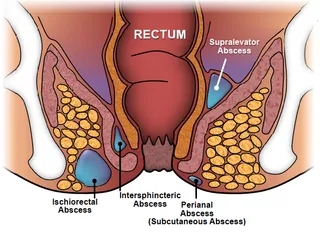
If you’ve noticed a lump around the anal opening — whether it’s painless or tender — it needs professional evaluation. This could be an external hemorrhoid, a thrombosed pile (a pile with a blood clot inside), a perianal abscess, or even the external opening of an anal fistula.
Some lumps shrink on their own. Others don’t, and they tend to get worse without treatment. A proctologist can tell the difference within minutes using a simple clinical examination and, if needed, a proctoscopy.
Don’t try to squeeze, pop, or self-treat a perianal lump. This can cause infection, worsen the condition, or lead to unnecessary pain.
3. Persistent Anal Pain That Doesn’t Go Away
Occasional mild discomfort during a hard bowel movement is one thing. But if you’re experiencing sharp, burning, or throbbing pain around the anus — especially if it lasts for hours after passing stool — something specific is going on.
Common causes include anal fissures (small tears in the anal lining), thrombosed hemorrhoids, and perianal abscesses. Fissures in particular can cause a cycle of pain and spasm that prevents healing, creating a chronic problem if left untreated.
If anal pain is affecting your daily routine, your ability to sit comfortably, or your willingness to have a bowel movement (yes, many patients start avoiding the toilet, which only makes things worse), see a proctologist without further delay.
4. Pus or Unusual Discharge from the Anal Area
Pus discharge from around the anus — especially if it stains your undergarments or is accompanied by a foul smell — is a hallmark sign of a perianal abscess or an anal fistula. A fistula is an abnormal tunnel that forms between the inside of the anal canal and the skin outside, and it almost always requires medical treatment.
Some patients notice the discharge comes and goes. The abscess builds up pressure, drains partially on its own, and then refills. This cycle can repeat for months or even years. Each cycle increases the risk of the fistula becoming more complex and harder to treat.
If you notice any discharge — whether clear, yellowish, or bloody — from the area around your anus, it’s time to see a specialist.
5. Itching That Won’t Respond to Creams or Hygiene Changes
Mild anal itching is extremely common and usually harmless — it could be related to moisture, dietary irritants, or even the soap you use. But when itching becomes persistent, intense, or keeps returning despite good hygiene and over-the-counter treatments, there may be an underlying condition driving it.
Chronic pruritus ani (the medical term for persistent anal itching) can be caused by skin conditions, low-grade fistulas, early hemorrhoids, or even pinworm infections. A proctologist can identify the root cause and give you targeted treatment instead of another tube of cream that isn’t working.
6. A Change in Bowel Habits That Persists for More Than Two Weeks
We all have occasional changes in bowel patterns — a few days of constipation after travel, or loose stools after a spicy meal. These are normal and temporary.
But when changes persist — such as unexplained diarrhea, alternating constipation and diarrhea, stools becoming consistently thinner than usual, or a feeling that your bowel doesn’t empty completely — they deserve medical attention. While many of these symptoms have benign explanations, they can also be early indicators of conditions that benefit enormously from early detection.
A proctologist will typically perform a physical exam, proctoscopy, and may recommend further investigations depending on your age, symptoms, and family history.
7. Difficulty Controlling Gas or Stool (Fecal Incontinence)
This is a symptom many patients find deeply embarrassing to discuss, which is exactly why I want to mention it here. If you’re experiencing involuntary leakage of gas, liquid stool, or solid stool — even occasionally — you are not alone, and there are effective treatments available.
Fecal incontinence can result from weakened anal sphincter muscles (sometimes after childbirth or previous surgery), nerve damage, chronic diarrhea, or rectal prolapse. A proctologist can assess your sphincter function, identify the cause, and recommend treatment that ranges from pelvic floor exercises to minimally invasive procedures.
The worst thing you can do with this symptom is suffer in silence. It affects your social life, your confidence, and your mental health. Help is available — and the earlier you seek it, the better the outcomes.
8. A Fissure or Wound That Hasn’t Healed in 6 Weeks
Acute anal fissures — small tears in the lining of the anal canal — often heal on their own with dietary changes, stool softeners, and topical medication. But when a fissure doesn’t heal within about six weeks, it’s classified as chronic.
Chronic fissures develop features that prevent natural healing: a sentinel skin tag at the outer edge, a hypertrophied papilla inside, and a tight internal sphincter that reduces blood flow to the area. At this point, conservative treatment alone is unlikely to work, and you need a proctologist to evaluate whether you need a more advanced approach such as lateral internal sphincterotomy or laser treatment.
Continuing to “wait and see” with a chronic fissure usually means months more of unnecessary pain.
9. Rectal Prolapse — Tissue Protruding from the Anus
If you notice tissue coming out of the anus during a bowel movement — and it doesn’t retract on its own, or it’s getting progressively worse — this could be rectal prolapse or advanced (Grade 3 or Grade 4) hemorrhoids.
In early stages, the tissue may slide out during straining and go back in by itself. Over time, it may require manual pushing to reduce, and eventually it may stay out permanently. This progression is avoidable with timely intervention.
A proctologist can distinguish between mucosal prolapse, full-thickness rectal prolapse, and prolapsing hemorrhoids — each of which has a different treatment pathway. Don’t wait until the problem is at its most advanced stage.
10. A Family History of Colorectal Disease Combined with Any of the Above
If you have a first-degree relative (parent or sibling) who has had colorectal polyps or colorectal cancer, your threshold for seeing a proctologist should be lower than average. Any of the symptoms listed above — even mild ones — deserve evaluation sooner rather than later.
Current medical guidelines recommend earlier screening for individuals with a family history. A proctologist can advise you on the right time to begin screening and what investigations are appropriate for your specific risk profile.
Why Patients Delay — and Why You Shouldn’t
In my 19+ years of practice, I’ve seen three main reasons patients put off a visit to the proctologist:
Embarrassment. Anorectal symptoms feel private. But a proctologist examines these conditions every single day. There’s nothing you can show us that we haven’t seen hundreds of times. We’re here to help, not to judge.
Fear of surgery. Many patients assume that seeing a proctologist means surgery is inevitable. That’s simply not true. A large number of anorectal conditions are managed conservatively — with medication, dietary changes, and lifestyle adjustments. And when surgery is needed, modern minimally invasive and laser techniques mean shorter procedures, less pain, and faster recovery than ever before.
Assumption it will go away. Some conditions do resolve on their own. Many don’t. And the ones that don’t tend to get more complex over time. A five-minute Grade 1 problem can become a Grade 3 problem that requires a procedure — simply because it was left unaddressed.
What to Expect at Your First Proctologist Visit
If you’ve never seen a proctologist before, here’s what a typical first consultation looks like:
The doctor will take a detailed history — your symptoms, their duration, your bowel habits, diet, lifestyle, and any relevant family history. This is followed by a gentle physical examination. In most cases, a proctoscopy (a quick, mildly uncomfortable but not painful procedure) is performed to visualize the inside of the anal canal and lower rectum.
Based on the findings, the doctor will explain your diagnosis clearly, discuss all available treatment options (conservative and surgical), and help you make an informed decision. A good proctologist will never rush you into a procedure you’re not comfortable with.
At Sharvari Hospital, we use advanced diagnostic tools including video proctoscopy, which allows you to see your own findings on screen. We believe informed patients make better decisions about their health.
Why Choose Sharvari Hospital for Your Proctology Consultation
At Sharvari Hospital, located in Wakad/Pimple Nilakh, Pune, we specialize in anorectal care with a focus on patient comfort and minimally invasive treatment.
Dr. Kundan Kharde, MBBS, MS (General Surgery), FMAS, brings over 19+ years of medical experience. He has treated thousands of patients with conditions ranging from simple piles to complex fistulas, and is known for his thorough diagnostic approach and patient-first philosophy.
What sets us apart:
- Advanced laser and minimally invasive surgical options for piles, fissures, fistulas, and more
- Video proctoscopy for accurate diagnosis
- Day-care procedures — most patients go home the same day
- Transparent pricing and insurance/cashless facility support
- A warm, judgment-free environment where your comfort matters
Ready to get checked? Don’t wait for symptoms to get worse.
📞 Call or WhatsApp: +91 951 951 1928 📧 Email: [email protected] 📍 Location: Sharvari Hospital, Wakad/Pimple Nilakh, Pune — 411027
Frequently Asked Questions
What does a proctologist do?
A proctologist is a surgeon who specializes in diagnosing and treating conditions of the anus, rectum, and colon. This includes hemorrhoids (piles), anal fissures, anal fistulas, rectal prolapse, perianal abscesses, pilonidal sinus, and more. They perform both conservative management and surgical procedures, including advanced laser and minimally invasive techniques.
Is a proctologist visit painful or embarrassing?
The examination is brief, gentle, and performed with full respect for your privacy and dignity. A proctoscopy may cause mild discomfort but is not painful. Proctologists see these conditions every day — there is absolutely no reason to feel embarrassed. Your health and comfort are the priority.
At what age should I start seeing a proctologist?
There’s no specific age — you should see a proctologist whenever you experience symptoms like rectal bleeding, pain, lumps, or discharge, regardless of your age. However, if you have a family history of colorectal disease, your doctor may recommend preventive screening starting in your 30s or 40s.
Can anorectal problems be treated without surgery?
Yes, many anorectal conditions — especially early-stage piles, acute fissures, and mild pruritus — respond well to conservative treatment including dietary modification, medication, sitz baths, and lifestyle changes. Surgery is typically recommended only when conservative measures have failed or when the condition is advanced. Modern surgical options like laser piles surgery are minimally invasive with quick recovery.
How do I know if my rectal bleeding is serious?
Any rectal bleeding that persists for more than a few days, is heavy, is dark in color, is accompanied by weight loss or change in bowel habits, or occurs alongside a family history of colorectal disease should be evaluated promptly. Even if the cause turns out to be benign (as it often is), getting it checked gives you peace of mind and catches problems early.
How much does a proctologist consultation cost in Pune?
Consultation fees vary depending on the hospital and the investigations required. At Sharvari Hospital, we offer affordable consultations and are transparent about costs from the outset. We also support cashless treatment under most major insurance plans. Call us at +91 951 951 1928 for specific details.