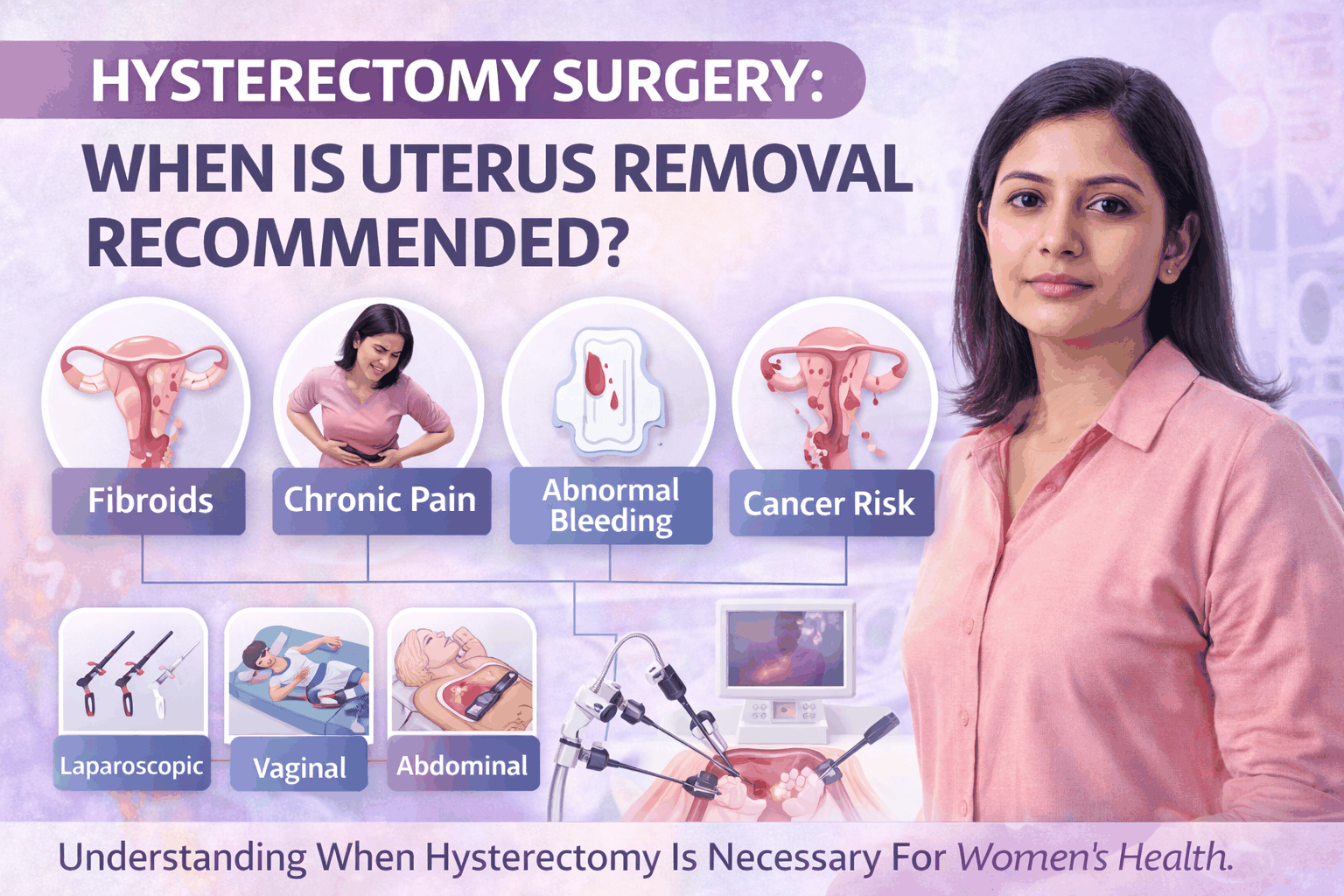
Hysterectomy surgery means removing the uterus. It is a major decision, and many women have understandable concerns.
Today, treatment is safer than before. In many cases, minimally invasive methods reduce pain and speed up healing.
What hysterectomy surgery treats
Doctors usually consider hysterectomy when symptoms are severe or long-standing, and non-surgical treatment is not helping.
Common reasons include:
- Large uterine fibroids with heavy bleeding or pressure
- Abnormal uterine bleeding not controlled with medicines
- Uterine prolapse causing discomfort and urinary symptoms
- Severe endometriosis or adenomyosis
- Certain gynecological cancers
Types of hysterectomy
The surgery plan depends on diagnosis, age, and long-term goals.
- Partial hysterectomy: uterus removed, cervix kept
- Total hysterectomy: uterus and cervix removed
- Radical/extended surgery: uterus with nearby structures, used in selected cancer cases
Your gynecologist explains why one approach is safer than another in your case.
Surgical approaches used today
Hysterectomy surgery can be done by different techniques:
- Laparoscopic hysterectomy: small cuts, camera-guided precision
- Vaginal hysterectomy: no abdominal incision in suitable patients
- Open abdominal hysterectomy: for complex anatomy or certain cancers
Whenever feasible, minimally invasive surgery is preferred for faster recovery.
Benefits of minimally invasive hysterectomy
Compared with open surgery, many women experience:
- Less blood loss
- Smaller scars
- Lower infection risk
- Shorter hospital stay
- Earlier return to routine activities
Recovery timeline and care
Recovery differs by technique and individual health.
Typical ranges:
- Laparoscopic or vaginal approach: about 2 to 4 weeks
- Open abdominal approach: about 4 to 6 weeks
For safer healing:
- Avoid heavy lifting until cleared
- Follow medicine and wound-care instructions
- Keep follow-up appointments
- Start gentle movement as advised
Is hysterectomy always necessary?
No. Doctors first evaluate non-surgical options when appropriate:
- Hormonal therapy
- Symptom-control medicines
- Endometrial ablation in selected bleeding cases
- Other uterus-preserving procedures
Hysterectomy surgery is usually advised only when benefits clearly outweigh risks.
Questions to ask before surgery
Use this checklist during consultation:
- Why is hysterectomy recommended in my case?
- Is a minimally invasive option possible?
- What organs will be removed?
- How long is recovery for my job and home routine?
- What are the risks and warning signs after discharge?
Final takeaway
Hysterectomy surgery can significantly improve quality of life when symptoms are severe and persistent.
With timely diagnosis, expert planning, and structured follow-up, most women recover well and return to normal activities with confidence.