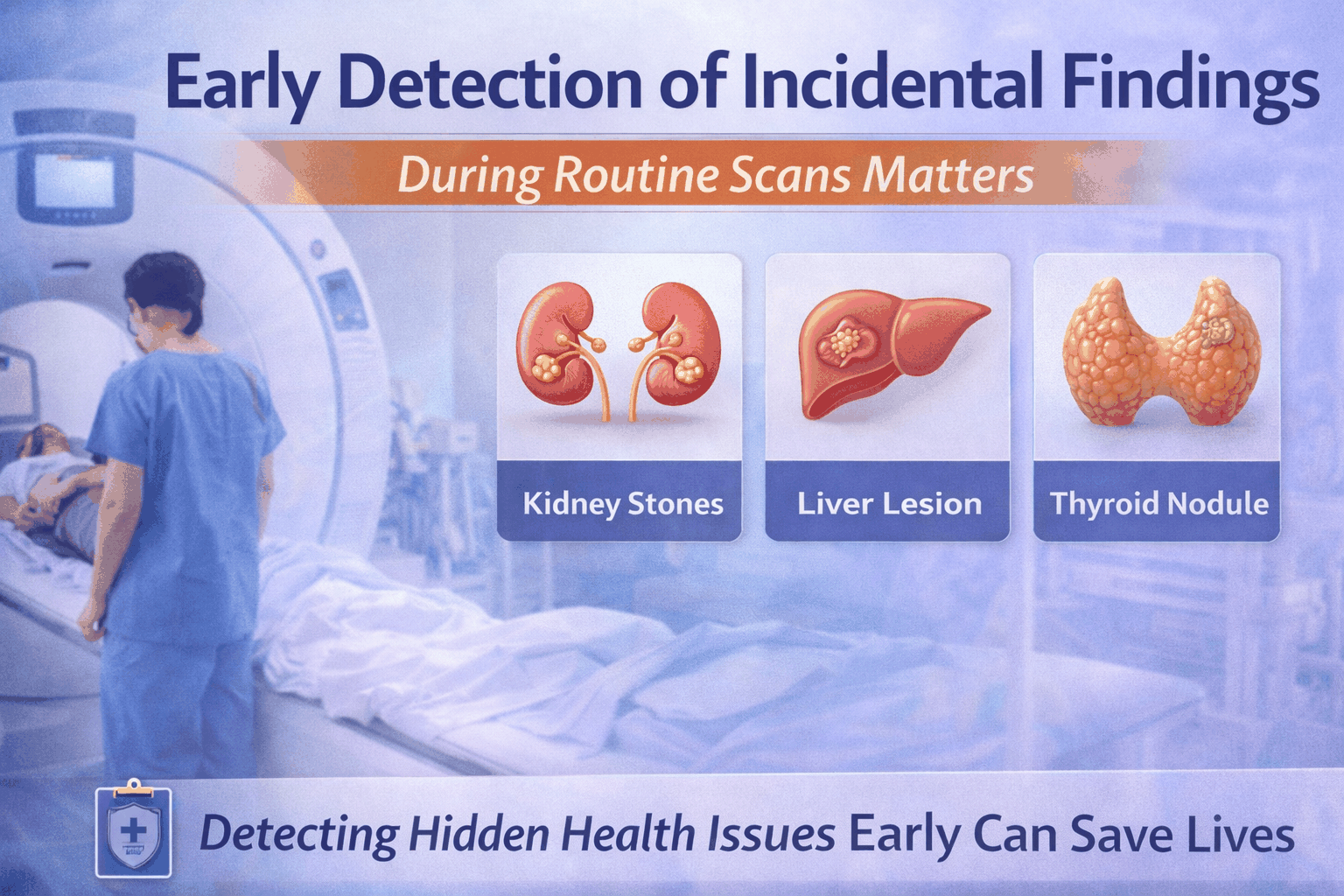
Early detection of incidental findings can prevent major health problems.
Many abnormalities are found by chance during scans done for unrelated symptoms. These findings are often silent but clinically important.
What incidental findings are
Incidental findings are unexpected results on imaging tests such as ultrasound, CT, MRI, or X-ray.
Examples include:
- Kidney stones or kidney cysts
- Gallbladder polyps or stones
- Thyroid nodules
- Liver lesions
- Small masses that need further evaluation
Not every incidental finding is dangerous. But every significant finding deserves proper review.
Why early detection matters
When a condition is found early, treatment is often simpler and safer.
Early action can mean:
- Less invasive treatment
- Lower treatment cost
- Reduced complication risk
- Better long-term outcomes
Ignoring an early finding can allow a manageable issue to become complex.
What to do after an incidental finding
Panic is not useful. Structured follow-up is.
Your doctor may suggest:
- Repeat imaging after a specific interval
- Blood tests for risk assessment
- Specialist referral based on organ involved
- Active treatment if progression risk is high
The key is to follow the timeline and not delay review.
Common mistakes patients make
Some patients delay care because they have no symptoms.
This is risky, especially when the report mentions:
- “Suspicious lesion”
- “Further correlation advised”
- “Needs follow-up imaging”
If your report includes these terms, prioritize specialist consultation.
Who should be extra careful
Routine scans become more important if you:
- Are above 40 years
- Have family history of cancer or chronic disease
- Have diabetes, obesity, or hypertension
- Notice unexplained fatigue, weight loss, or recurrent pain
Regular evaluation helps detect silent disease at a treatable stage.
Role of coordinated specialist review
Incidental findings may involve different systems. A coordinated team reduces delay and confusion.
At Sharvari Hospital, diagnosis can be aligned across surgery, medicine, and imaging to create a clear next-step plan.
Final takeaway
Early detection of incidental findings is an opportunity, not a threat.
Timely interpretation, planned follow-up, and specialist input can prevent disease progression and protect long-term health.