Minimally invasive surgery in Pune is helping patients recover faster with less post-operative discomfort.
At Sharvari Hospital, many procedures are planned with laparoscopic or laser techniques when medically suitable.
What makes minimally invasive surgery different
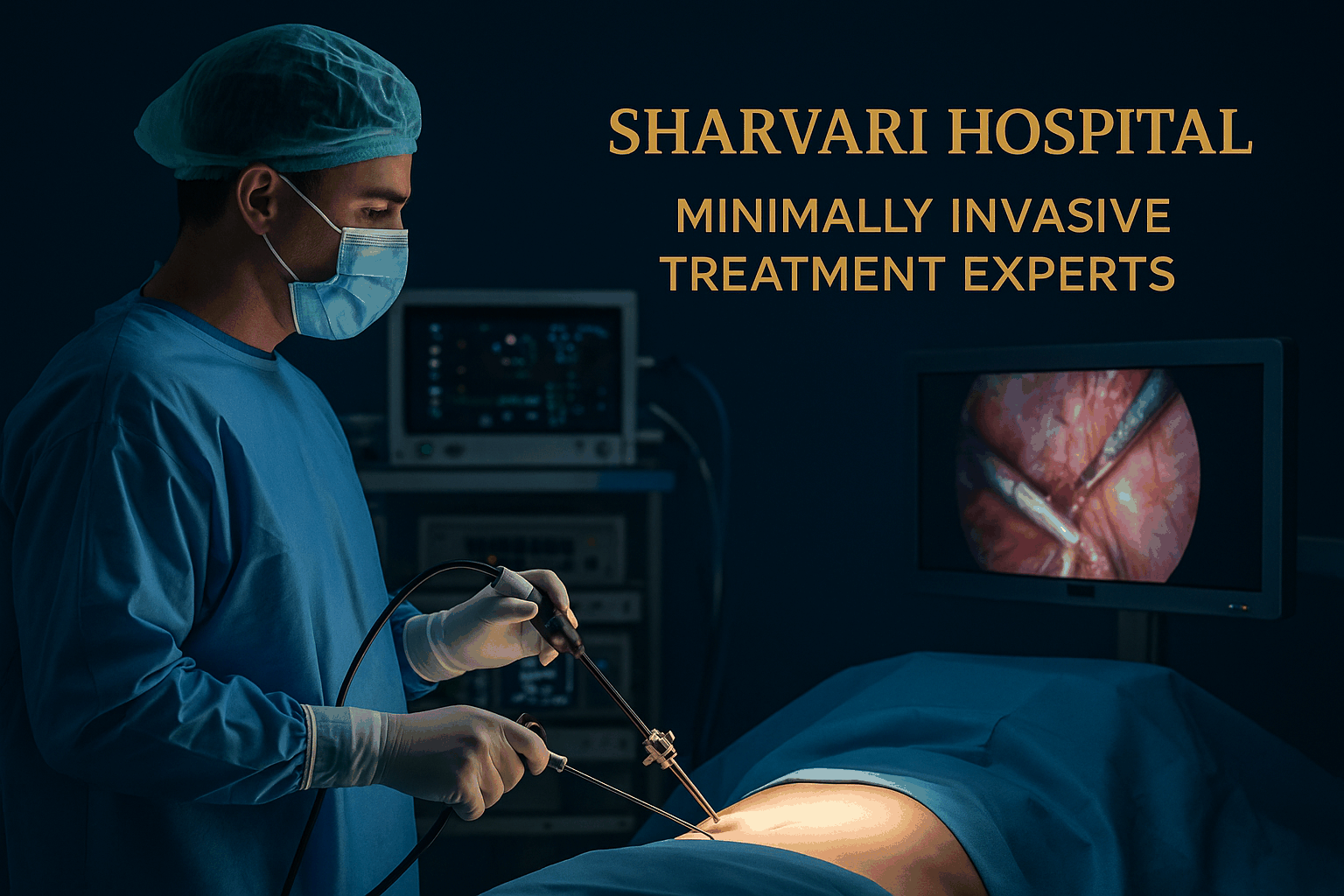
Traditional open surgery uses larger cuts. Minimally invasive techniques use small ports, camera guidance, and precision tools.
This usually means:
- Lower blood loss
- Smaller scars
- Less pain after surgery
- Reduced infection risk
- Shorter hospital stay
Who benefits most
The approach is useful for many patient groups:
- Working professionals who need shorter downtime
- Elderly patients who need early mobilization
- Patients with lifestyle conditions needing lower surgical stress
- People seeking quicker return to daily activity
Final suitability is decided after examination and investigations.
Common specialties where it helps
At Sharvari Hospital, minimally invasive surgery in Pune is commonly used in:
- Proctology: piles, fissure, fistula in selected cases
- Laparoscopy: hernia, gallbladder, appendix
- Gynecology: selected cyst and uterine procedures
- Orthopedics: arthroscopic joint interventions
Recovery-focused care model
Good outcomes depend on more than just technique.
A faster recovery plan typically includes:
- Pre-surgery counseling and clear expectations
- Pain management with early movement protocol
- Nutrition and hydration guidance
- Timed follow-up after discharge
Practical recovery timeline
Each condition differs, but many patients notice:
- Earlier walking in the first 24 hours
- Shorter admission in selected procedures
- Faster return to office work than open surgery
Your surgeon provides the exact timeline based on diagnosis and physical condition.
When open surgery may still be better
Minimally invasive does not mean “best for all.”
Open surgery may be safer in:
- Complex anatomy or prior dense scar tissue
- Advanced disease requiring wide exposure
- Emergency scenarios with unstable findings
The safest option is always the right option.
Questions to ask before surgery
Discuss these points in consultation:
- Am I suitable for minimally invasive surgery?
- What are my expected pain and recovery milestones?
- What are signs of complications after discharge?
- How long before I can drive, work, and exercise?
Final takeaway
Minimally invasive surgery in Pune offers real quality-of-life benefits when chosen appropriately.
At Sharvari Hospital, treatment decisions are based on safety, recovery goals, and long-term outcomes rather than one-size-fits-all protocols.