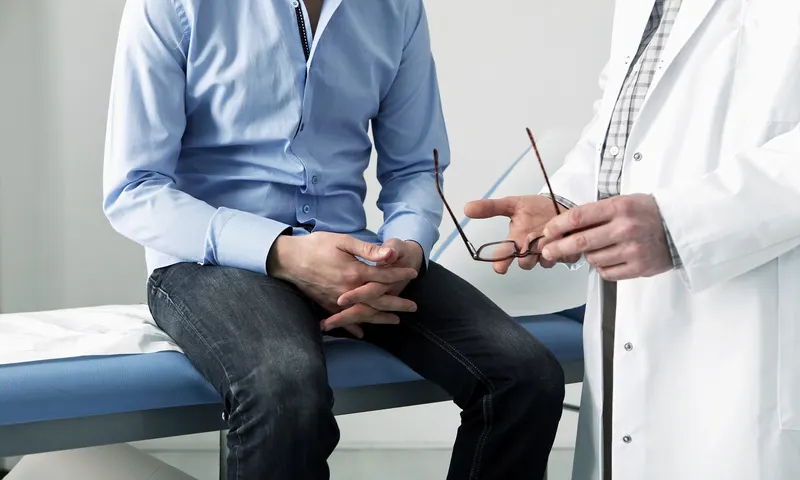
It usually starts quietly. You wake up twice a night to pass urine instead of sleeping through. The stream is weaker than it used to be. You stand at the toilet waiting for it to start, and even after finishing, the bladder does not feel fully empty.
Most men in their 50s and 60s brush this off as “just age”. Then one day the urine stops completely, a catheter goes in at the emergency room, and the family is suddenly asking a very practical question: “Doctor, what will this cost us?”
You deserve a straight answer before that day arrives. BPH treatment cost in Pune in 2026 typically ranges from ₹45,000 to ₹2,00,000 for surgery, while men who are treated early with medicines alone often spend only ₹8,000 to ₹20,000 a year. The difference between those two numbers is usually just how long the problem was ignored.
In this guide I will break down the realistic 2026 price ranges for every route — medicines, bipolar TURP, laser prostate surgery, HoLEP — what those hospital packages actually include, how insurance treats prostate surgery, and the billing surprises to watch out for.
What Is Prostate Enlargement (BPH)?
The prostate is a walnut-sized gland that sits just below the bladder and wraps around the urethra — the tube urine passes through. From around age 45 onwards, this gland naturally grows. The medical name is benign prostatic hyperplasia (BPH) — “benign” meaning it is not cancer.
The problem is purely mechanical. As the gland enlarges, it squeezes the urethra like a hand tightening around a hosepipe. The bladder has to push harder against that resistance, its muscle wall thickens, and over years it becomes irritable and then weak.
This matters for cost, because a bladder treated early recovers well and needs a simpler operation. A bladder that has been straining for eight years may need a bigger procedure — and may not fully recover even after the prostate is treated.
Causes and Risk Factors
- Age — the single biggest factor. Roughly half of men over 60 have some degree of BPH.
- Hormonal changes — a shift in the testosterone-to-DHT balance drives prostate tissue growth.
- Family history — BPH needing treatment before 60 often runs in families.
- Metabolic factors — obesity, diabetes and a sedentary lifestyle are strongly associated with faster progression.
- Chronic inflammation of the prostate can worsen urinary symptoms.
BPH is not caused by sexual activity, and it is not a precursor to prostate cancer — though the two can exist in the same man, which is why a proper evaluation matters.
Symptoms You Should Not Ignore
Obstructive symptoms (the prostate blocking flow):
- Weak or slow urine stream
- Difficulty starting urination — standing and waiting
- Straining to pass urine
- Stream that starts and stops
- Dribbling at the end
- Feeling the bladder is not fully empty
Irritative symptoms (the bladder reacting):
- Passing urine frequently during the day
- Waking two or more times at night (nocturia)
- Sudden urgency, sometimes with leakage
Warning signs that need same-day attention:
- Complete inability to pass urine (acute retention) — this is an emergency
- Blood in the urine
- Fever with burning urination
- Repeated urinary infections
How BPH Is Diagnosed — and What the Work-Up Costs
A good urology evaluation is inexpensive compared to surgery, and it is what decides which procedure you actually need.
| Test | What it shows | Typical Pune cost (2026) |
|---|---|---|
| IPSS symptom score + clinical exam | Severity grading, digital rectal examination | ₹500 – ₹1,000 (consultation) |
| Urine routine + culture | Rules out infection | ₹400 – ₹1,200 |
| Serum creatinine | Checks kidney function | ₹250 – ₹600 |
| PSA (prostate specific antigen) | Screens for prostate cancer | ₹600 – ₹1,500 |
| Ultrasound KUB with post-void residue | Prostate size, residual urine, bladder wall, kidney back-pressure | ₹1,200 – ₹2,500 |
| Uroflowmetry | Objective measure of flow rate | ₹600 – ₹1,500 |
Total work-up: roughly ₹3,000 – ₹8,000. Never agree to prostate surgery without a prostate size measurement, a post-void residual volume and a PSA. Those three numbers determine both the right procedure and the right price.
Treatment Options and Cost in Pune (2026)
| Treatment | Best suited for | Cost range (Pune, 2026) |
|---|---|---|
| Medical management (alpha blockers ± 5-ARI) | Mild to moderate symptoms, prostate under ~40g | ₹600 – ₹1,800 per month (₹8,000 – ₹20,000 per year) |
| Emergency catheterisation + short admission | Acute urinary retention | ₹15,000 – ₹35,000 |
| Monopolar TURP | Standard prostates, 30 – 80g | ₹45,000 – ₹90,000 |
| Bipolar TURP | Same range, safer electrolyte profile, larger glands | ₹60,000 – ₹1,10,000 |
| Laser vaporisation / thulium (ThuLEP) | Men on blood thinners, higher cardiac risk, day-care intent | ₹70,000 – ₹1,30,000 |
| HoLEP (holmium laser enucleation) | Large prostates above 80 – 100g | ₹1,00,000 – ₹2,00,000 |
| Open simple prostatectomy | Very large glands, or bladder stones needing removal | ₹90,000 – ₹1,60,000 |
| Government / ESIC hospital | Eligible patients | ₹5,000 – ₹20,000 |
These are realistic Pune-market bands for 2026 across private hospitals in PCMC, Wakad, Baner and Hinjewadi. Corporate chain hospitals typically sit at or above the top of each band; smaller specialty hospitals sit near the middle.
Why Laser Costs More Than TURP
Patients often ask why the laser option adds ₹20,000 – ₹40,000 to the bill. Three honest reasons:
- Consumables. Laser fibres are single-use or limited-use and expensive.
- Equipment. A holmium or thulium platform is a multi-crore machine that has to be amortised.
- Case selection. Laser is often chosen for the harder patients — larger glands, men on aspirin or clopidogrel who cannot stop blood thinners, or men with significant cardiac history.
Laser is genuinely better in specific situations: less bleeding, shorter catheter time, and safety for anticoagulated patients. But a well-performed bipolar TURP on a 50g prostate gives an excellent result at a lower price. Anyone who tells you laser is the only acceptable option for every prostate is selling, not advising.
What Should Be Included in the Package
Before you accept any quotation in Pune, ask for it in writing and confirm these are inside the number:
- Surgeon, anaesthetist and assistant fees
- Operation theatre charges and anaesthesia
- Room rent for the stated number of days (usually 1 – 2 nights)
- Nursing, routine medicines and IV fluids during stay
- Catheter, irrigation fluid and drainage set
- Pre-operative investigations and physician fitness
- Catheter removal and the follow-up visit
That last line is the one that catches people. Some centres discharge you with a catheter and then bill separately for the removal visit, the bladder wash, or a repeat uroflowmetry. Ask the question directly: “Is catheter removal and the first follow-up included?”
Also confirm: is the histopathology report of the resected tissue included? Prostate chips are routinely sent for biopsy, and that report costs ₹1,500 – ₹3,500 if billed separately.
Does Insurance Cover Prostate Surgery in India?
Yes — BPH surgery is a medically necessary procedure and is covered by virtually all health insurance policies, provided the policy is active and the conditions below are met.
- Waiting period. Most Indian policies list BPH among “specified diseases” with a 1 to 2 year waiting period. Claims filed inside that window are usually rejected. Check your policy schedule before planning a non-emergency date.
- Emergency retention is different. If you present with acute urinary retention and are admitted, the admission itself is an emergency; the waiting-period clause may still apply to the definitive surgery, so get pre-authorisation in writing.
- Room-rent capping. If your policy caps room rent at, say, 1% of sum insured and you choose a costlier room, the insurer proportionately reduces the entire bill — including surgeon fees. Pick the room your policy allows.
- Cashless vs reimbursement. Confirm your insurer is on the hospital’s cashless panel. If not, budget to pay upfront and claim later.
- Pre- and post-hospitalisation. Most policies cover investigations 30 days before and medicines 60 days after. Keep every bill and prescription.
- Senior citizens. Co-payment clauses (10 – 20%) are common in senior citizen plans. Ask the TPA desk to compute your out-of-pocket share before admission.
One thing we will not do at Sharvari Hospital, and you should refuse anywhere: misdeclaring a diagnosis or the date of onset to defeat a waiting period. It is fraud, it voids the policy, and it puts your future claims at risk.
Recovery After Prostate Surgery
| Timeline | What to expect |
|---|---|
| Day 0 | Surgery under spinal anaesthesia, usually 45 – 75 minutes. Catheter with continuous bladder irrigation. |
| Day 1 | Irrigation stopped once urine is clear. Walking, eating normally, most pain is mild. |
| Day 1 – 2 | Catheter removed (earlier with laser, 1 – 3 days with TURP). Discharge once you pass urine well. |
| Week 1 | Burning and urgency while passing urine is normal and settles. Avoid straining and heavy lifting. |
| Week 2 – 3 | Back to desk work and driving. Traces of blood in urine can appear around day 10 – 14 as scabs separate — increase fluids, rest, and call us if it is heavy. |
| Week 4 – 6 | Stream strength and night-time frequency improve substantially. Resume gym, travel and sexual activity after clearance. |
Two honest notes on outcomes. First, most men experience retrograde ejaculation after TURP or HoLEP — semen passes backwards into the bladder. It does not affect erections or sensation, but it does affect fertility, which matters if you are younger. Second, if the bladder muscle was already damaged by years of obstruction, some urgency and frequency may persist even after a technically perfect operation. Early treatment protects against this.
When to See a Doctor
Book a urology consultation if you have:
- Woken twice or more per night to pass urine for over a month
- A stream noticeably weaker than a year ago
- To strain or wait to start urinating
- A feeling of incomplete emptying
- Two or more urinary infections in a year
Seek emergency care the same day for complete inability to pass urine, heavy blood in the urine, fever with burning urination, or new lower back pain with reduced urine output.
Why Choose Sharvari Hospital
At Sharvari Hospital, Wakad, our approach to prostate enlargement is deliberately conservative-first: not every enlarged prostate needs an operation. Many men do well on medication for years, and we will tell you plainly when that is the better option for you.
- Honest, itemised estimates. You get the number in writing before admission, with what is and is not included.
- Right-sized procedure. We select TURP, bipolar or laser based on your prostate size, blood thinners and cardiac risk — not on what bills higher.
- 19+ years of surgical experience under Dr. Kundan Kharde (MBBS, MS – General Surgery, FMAS), with a minimally invasive, day-care-first philosophy.
- Insurance and TPA support. Our desk handles pre-authorisation and tells you your realistic out-of-pocket share upfront.
- 240+ Google reviews from patients across Wakad, Pimple Nilakh, Hinjewadi, Baner and Tathawade.
Book your consultation:
- 📞 Call: +91 951 951 1928
- 💬 WhatsApp: +91 951 951 1928
- 📍 Sharvari Hospital, Wakad / Pimple Nilakh, Pune — 411027
- ✉️ [email protected]
Precise Surgery, Swift Recovery.
Frequently Asked Questions
What is the cost of BPH treatment in Pune in 2026?
Prostate enlargement treatment cost in Pune ranges from ₹45,000 to ₹2,00,000 for surgery, depending on the procedure. Monopolar TURP costs ₹45,000 – ₹90,000, bipolar TURP ₹60,000 – ₹1,10,000, laser prostate surgery ₹70,000 – ₹1,30,000, and HoLEP for very large glands ₹1,00,000 – ₹2,00,000. Men managed with medicines alone spend roughly ₹8,000 – ₹20,000 per year.
Is TURP covered by health insurance in India?
Yes. TURP and laser prostate surgery are medically necessary procedures covered by nearly all Indian health insurance policies. However, BPH is commonly listed as a specified disease with a 1 to 2 year waiting period, and room-rent capping can proportionately reduce your claim. Always get written pre-authorisation before a planned admission.
Is laser prostate surgery better than TURP?
Not universally. Laser (thulium or holmium) offers less bleeding, a shorter catheter time and is clearly safer for men who cannot stop blood thinners or who have significant cardiac risk. But for a standard 40 – 70g prostate in an otherwise fit man, a well-performed bipolar TURP gives an equally good long-term result at a lower cost.
How long does recovery after prostate surgery take?
The catheter usually comes out in 1 – 3 days and most men are discharged within 48 hours. Desk work and driving resume in about 2 weeks, and full activity including gym and sexual activity in 4 – 6 weeks. Mild burning and urgency for the first 1 – 2 weeks is normal.
Can prostate enlargement be treated without surgery?
Often, yes. Alpha blockers relax the prostate muscle and 5-alpha-reductase inhibitors shrink the gland over 6 – 12 months. Medication works well for mild to moderate symptoms with a prostate under about 40g. Surgery becomes necessary when medicines fail, or when complications appear — retention, bladder stones, recurrent infections, blood in urine, or kidney back-pressure.
Does BPH mean I have prostate cancer?
No. BPH is a benign, non-cancerous enlargement. However, both conditions can coexist and can cause similar urinary symptoms, which is why a PSA test and a digital rectal examination are part of every proper evaluation. Prostate tissue removed during surgery is routinely sent for histopathology as an additional safeguard.
Will prostate surgery affect my sex life?
Erections and sensation are usually unaffected. The common change is retrograde ejaculation — semen travels into the bladder instead of outwards — which happens in most men after TURP or HoLEP. It is harmless but does reduce fertility, so discuss this with your surgeon if you are planning children.
Medically reviewed by Dr. Kundan Kharde, MBBS, MS (General Surgery), FMAS — 19+ years of surgical experience, Sharvari Hospital, Wakad, Pune. This article is for general information and is not a substitute for an in-person consultation.