Case studies · Piles · Problems after surgery elsewhere · De-identified
Case study: anal stenosis and a non-healing wound one year after piles surgery — corrected with stricture release and mucoplasty
A young woman in her early twenties had a piles procedure at another hospital about a year earlier. Instead of settling, the pain continued and passing stool became progressively harder. Examination showed a severe anal stenosis — a scar narrowing of the anal canal — with a wound at 6 o’clock that had never healed. This case shows what that looks like, why a wound in that position keeps re-opening, and how excision, stricture release and mucoplasty corrected it.
This page contains explicit surgical photographs of the anal region. The pre-operative and on-table images are blurred until you choose to view them.
Presentation
A woman in her early twenties came to Sharvari Hospital, Pimple Nilakh, with about a year of pain in the anal region and increasing difficulty passing stools. She had undergone a piles procedure at another hospital roughly a year earlier. The early weeks after that procedure had been painful, as expected, but the pain never went away. Over the following months her stools became thinner, each motion took longer and hurt more, and she began to dread going to the toilet — which in turn made her hold on, harden the stool and hurt more still.
She had been using creams and stool softeners throughout. They took the edge off but never changed the underlying problem. By the time she came in, a year had passed in which the expected recovery from a piles procedure — comfortable, normal-calibre motions within a few weeks — had simply never arrived.
It is worth saying plainly at the start: complications can follow any anorectal surgery, whatever the technique and whoever performs it. This page is not about what went wrong elsewhere. It is about recognising, early, when a recovery is not on track, and about the corrective plan that was possible once the problem was examined properly.
What anal stenosis is and why a wound may not heal
Anal stenosis is a narrowing of the anal canal caused by scar tissue. Healthy anal lining is soft, elastic and stretches to let a normal stool pass. Scar tissue does not stretch. When a wound inside the anal canal heals with a band of scar — which can happen after any operation, cut or burn in that area — the canal becomes fixed at a smaller diameter. Stools become thin, passing them takes effort, and the tight ring is stretched and torn a little with each motion.
That repeated stretching explains the second finding in this case: a wound that would not heal. The raw area sat at 6 o’clock — the back of the anus, directly in the line of the stool as it passes — and extended about 3 cm outside the anal canal onto the skin. Every bowel movement pulled the scarred ring open and dragged across the exposed area, so it was re-injured before it could close. A wound that is traumatised every day cannot heal, and the longer it stays open, the more scar forms around it, which narrows the canal further. That is the cycle: scar narrowing → forced, painful motions → repeated trauma to the raw area → no healing → more scar.
Creams and softeners help at the edges of this cycle, by making stool easier to pass, but they cannot remove mature scar or close a wound that is being reopened daily. This is descriptive anatomy, not blame: the same sequence can follow any anorectal procedure, and it is one of the recognised reasons a recovery stalls.
Examination
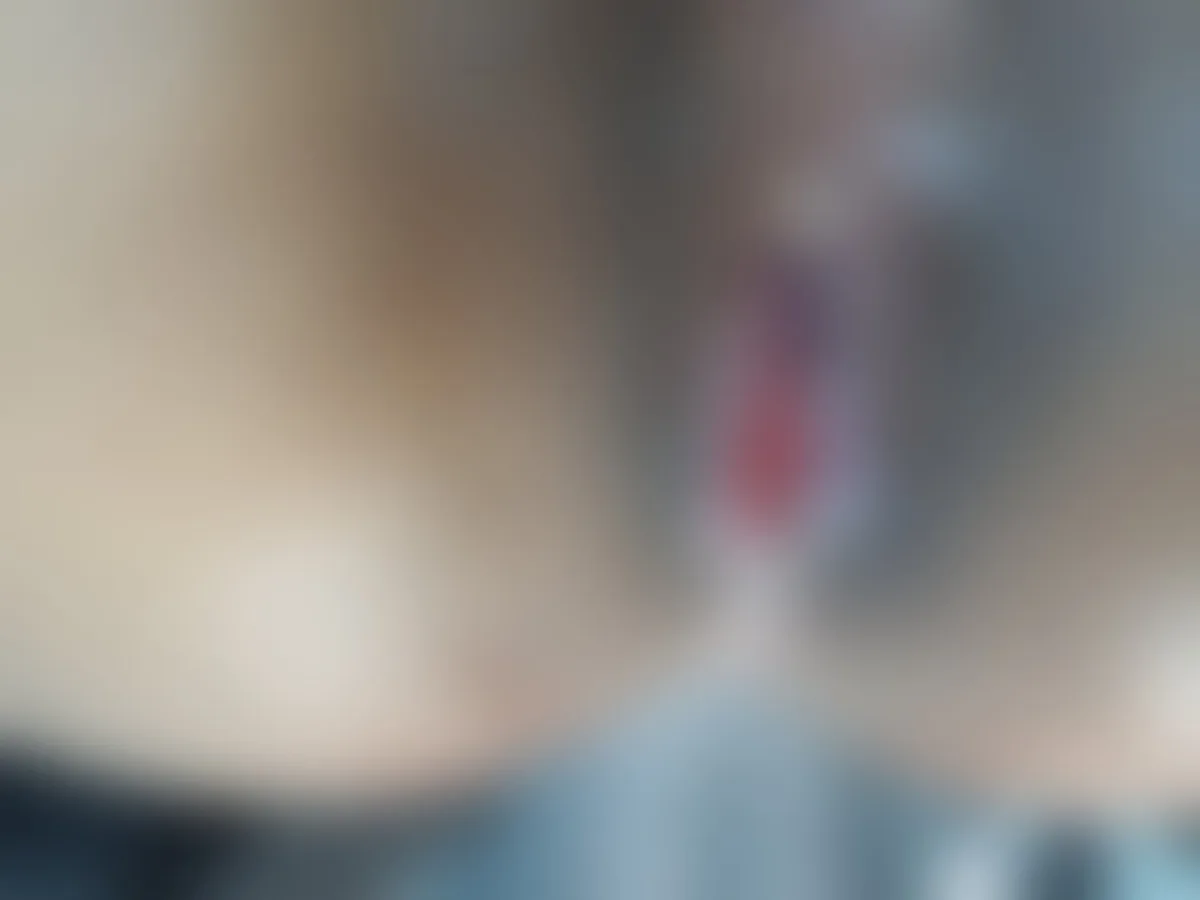
On examination the anal canal was severely narrowed — a tight, fibrous ring that would not admit the examining finger comfortably. At 6 o’clock there was a non-healing wound: a raw, granulating area inside the scar that extended about 3 cm outside the anal canal onto the perianal skin. There was no abscess, no fistula opening and no active piles tissue prolapsing.
The labelled photograph shows those two findings before surgery: the narrowed opening, and the raw wound tracking from the canal outward at 6 o’clock. The surrounding skin is scarred and inelastic. This is the anatomy that had been producing a year of painful, thin, difficult stools.
With the diagnosis clear on examination — anal stenosis with a chronic non-healing wound — and routine pre-anaesthetic assessment complete, a corrective operation was planned. Because the scar was mature and the wound long-standing, simple dilatation alone was not considered adequate for this anatomy; the reasons are explained below.
The corrective operation: excision, stricture release, mucoplasty
Under anaesthesia, the operation had three parts, done in one sitting.
1. Excision of the non-healing wound. The chronic raw area at 6 o’clock, with its rim of unhealthy scar, was cut out completely. A wound that has failed to heal for a year is lined with tissue that has lost the ability to close; leaving it in place would mean leaving the problem in place.
2. Release of the stricture. The fibrous ring narrowing the anal canal was divided so that the canal could open to a normal calibre. This is the step that removes the physical narrowing — but on its own it leaves a fresh raw surface where the scar was cut, and a raw surface in the anal canal tends to heal by forming scar again.
3. Mucoplasty. This is the step that stops the narrowing coming back. In patient words: a flap of healthy, soft, well-supplied lining (mucosa) from just inside the anal canal is freed and slid down to cover the raw area left after the excision and release, and stitched in place. Instead of healing by scar, the defect is now covered by living, elastic tissue that behaves like normal anal lining. The canal heals open, and the lining that meets the stool is mucosa rather than a raw wound.
Why simple dilatation would not have been enough here. Stretching a stricture — with a dilator in clinic or under anaesthesia — can help a soft, early narrowing. It does nothing for a chronic wound, and in a mature, fibrous ring like this one, dilatation tears the scar and the tear heals as more scar; many patients are back to where they started within weeks. When the scar is mature and there is an established non-healing wound, the tissue has to be excised and replaced with healthy lining, which is what mucoplasty does.
On the table after the repair
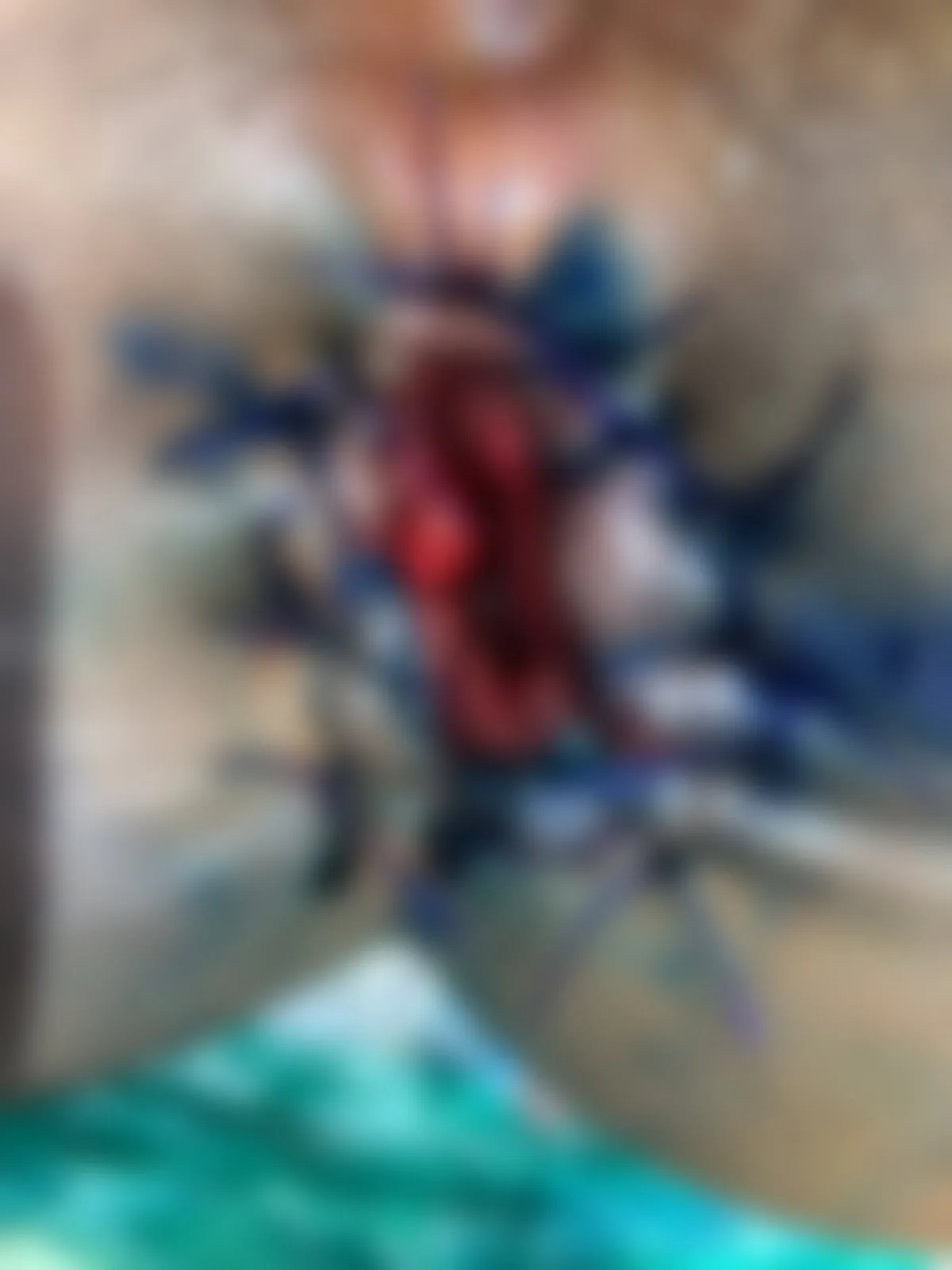
This photograph was taken on the table, immediately after the repair. Compare it with the pre-operative image: the tight ring has been released and the anal canal is open to a normal calibre. The chronic raw area at 6 o’clock has been excised, and in its place the advanced mucosal flap has been sutured down to cover the defect.
The labels mark the released stricture and the mucoplasty. The lining now covering the 6 o’clock position is healthy mucosa with its own blood supply, which is what allows it to heal rather than re-scar. A small dressing was placed and the patient was moved to recovery.
Recovery
In this patient’s case the wound healed completely over six to eight weeks. At follow-up the stricture had resolved — the anal canal admitted a normal examination comfortably — and she had no complaints: no pain, and stools of normal calibre passed without difficulty. That is this patient’s course, not a promise; every repair is different and timelines are confirmed for each patient after examination.
The general guidance after a stenosis repair is the same for everyone: keep the stool soft and regular so the new flap is not strained; warm sitz baths after each motion; oral pain relief in the first days; no heavy lifting in the early weeks; and scheduled reviews so that the flap and the calibre of the canal are checked as healing progresses. Any fresh heavy bleeding, fever, inability to pass urine or worsening pain is a reason to call the hospital, which is open 24×7.
When to seek a second opinion after piles surgery
Recovery after any piles procedure has an expected shape: pain that eases week by week, a wound that closes, and stools that return to normal calibre. When the recovery leaves that shape, an examination — not more waiting — is the right next step. Five signs that deserve a review:
- 1
Pain that persists beyond the expected recovery. Discomfort in the first two to three weeks is normal; pain that is unchanged or worsening at six weeks is not.
- 2
Narrowing or thin stools. Stools that have become pencil-thin, or that need straining to pass, suggest the canal is scarring down.
- 3
A wound not healed by six to eight weeks. Most anal wounds close within that window; one that is still raw or discharging after it needs to be looked at.
- 4
Recurrent bleeding. Bleeding that returns after the initial healing period, or that never settled, should be examined rather than treated with creams alone.
- 5
Incontinence. Any new leakage of gas or stool, or difficulty holding on, after an anorectal procedure warrants a specialist assessment.
Bring the previous discharge summary and operation notes if you have them. They help the surgeon understand what was done, but the plan is made from what is found on examination.
What this case shows
A year of pain and difficult stools after a piles procedure was not something to keep managing with creams — it was a scar stricture with a wound that could not heal because it was re-injured with every motion. Once examined, the problem had a definable surgical answer: excise the wound, release the stricture, and cover the defect with healthy mucosa so it heals open. Complications can follow any anorectal surgery; what changes the outcome is recognising early that a recovery is off track and putting a corrective plan in place.
Consent and privacy
This case is published for patient education with the patient’s written consent. No name, patient identifier, date of admission, report or hospital number is shown; age is given only as a range. The hospital where the earlier procedure was performed, the surgeon and the procedure done there are not identified and are not the subject of this page. The clinical photographs are cropped to the operative field so that no identifying feature is visible, and the pre-operative and on-table images are blurred until a visitor chooses to view them. Social-media previews of this page use only a blurred image. Every case study on this site follows the same rule: the anatomy and the decision are shared, the person is not.
Still in pain after piles surgery elsewhere? Get it examined
Persistent pain, thin stools or a wound that has not closed months after a piles procedure has a cause that can be found on examination — and scar narrowing and non-healing wounds can be corrected. Call +91 951 951 1928 or WhatsApp us with your previous notes.
How we approach second opinions after surgery elsewhere is set out on when you should get a second opinion. All grades, symptoms and costs start at piles treatment in Pune.
Your surgeon: Dr. Kundan Kharde, MS, FMAS — Founder & Director, Lead Proctology Surgeon, Sharvari Hospital. 19+ years, 6,000+ surgeries.
SR. NO. 19(P), behind Gulmohor Park, Vishal Nagar, Pimple Nilakh, Pune 411027 · Open 24 hours · +91 951 951 1928